

Tel:+86-0572-2926332 / 2926337

E-mail:[email protected]
 REQUEST A QUOTE

 en
en  English
 简体中文
简体中文Silicon Nitride Stopper Valve: Why Foundries Rely on It for Low-Pressure Casting
2026.07.01
Content
- 1 What a Silicon Nitride Stopper Valve Actually Does
- 2 Why Si3N4 Outperforms Other Materials in This Role
- 3 Where Stopper Valves Are Used Across the Casting Industry
- 4 How Long a Stopper Valve Lasts and What Affects Its Service Life
- 5 Choosing the Right Stopper Valve for Your Casting System
- 6 Handling and Installation Tips That Protect Your Investment
What a Silicon Nitride Stopper Valve Actually Does
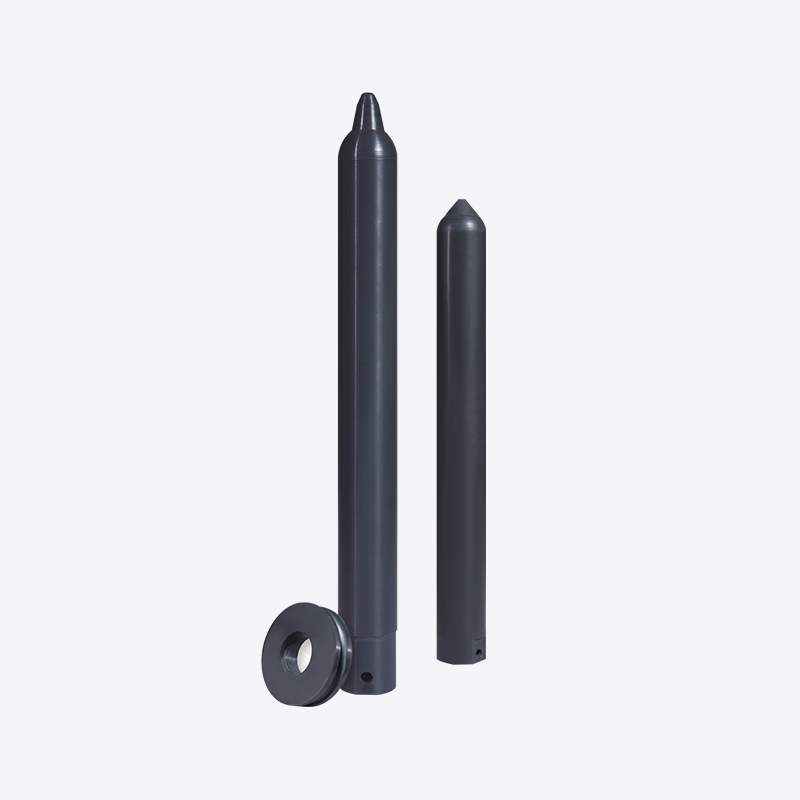
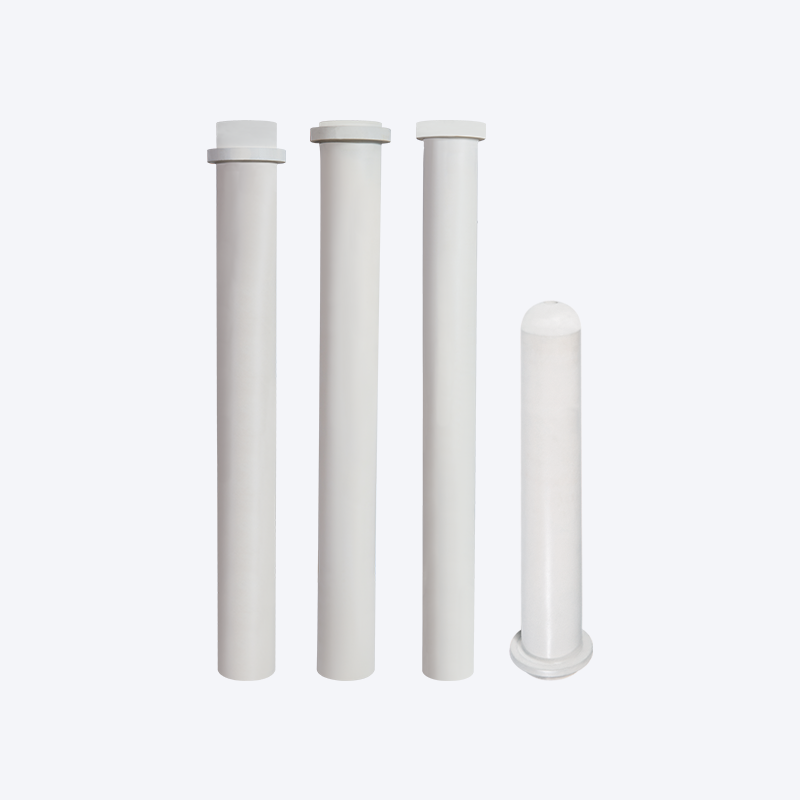
A silicon nitride stopper valve is a precision ceramic component used primarily in low-pressure die casting, aluminium casting, and non-ferrous metal processing operations to control the flow of molten metal from a holding furnace or crucible into a die or mould cavity. In a typical low-pressure casting system, the stopper valve sits inside a stopper tube, and as it moves up and down it opens or seals the path that molten metal travels through under controlled gas pressure. This sealing action is what allows the operator to fill a mould cavity precisely, then cut off flow cleanly once the cavity is full, without dribbling, splashing, or inconsistent fill rates that would otherwise lead to porosity or surface defects in the finished casting.
The reason silicon nitride is chosen for this job over metal or other ceramic materials comes down to how the component behaves in direct, repeated contact with molten aluminum and similar alloys. Non-wetting in contact with aluminium and its alloys, silicon nitride ceramic is most suitable material used for low pressure die casting. That non-wetting behavior matters because a stopper valve that molten metal sticks to will gradually build up residue, distort its sealing geometry, and eventually fail to shut off flow cleanly, which is exactly the kind of slow degradation foundries try to avoid.
Why Si3N4 Outperforms Other Materials in This Role
Stopper valves see a brutal combination of conditions: constant thermal cycling, abrasive contact with flowing molten metal, and a need to hold a precise seal cycle after cycle. PEAKLAND silicon nitride ceramic has high density and abrasion resistance, it is most suitable material used for low pressure die casting, and that same density is what gives the valve its airtightness, since any porosity in the ceramic body would let pressurized gas leak past the seal and throw off fill accuracy. In the low-pressure casting machine, the sealing tube has high airtightness, and with the popularization of the continuous casting process, the importance of the sealing tube is getting more attention in the industry.
Core Material Properties That Matter on the Foundry Floor
Beyond density and non-wetting behavior, a handful of other Si3N4 properties directly affect how long a stopper valve lasts and how consistently it performs. Extraordinary thermal shock resistance allows the material to withstand temperatures up to 1000ºC, which is essential given how quickly a stopper valve heats up when it's first lowered into molten metal and cools when removed for inspection. It is also easier to machine to tight tolerances, down to around 0.001mm, which is what allows the valve and its seat to mate precisely enough to hold a gas-tight seal. Chemical corrosion resistance under high temperature holds up against most substances except hydrofluoric acid and phosphoric acid, and wear and abrasion resistance is far better than stainless steel, with mechanical properties like hardness, compressive strength, and flexural strength also outperforming stainless steel.
Where Stopper Valves Are Used Across the Casting Industry
While low-pressure aluminum die casting is the primary home for silicon nitride stopper valves, the same set of properties makes the component useful in a handful of related processes. Magnesium casting is one notable example, since magnesium melts are considerably more reactive than aluminum and demand a material that won't degrade or contaminate the melt on contact. Some foundries also use Si3N4 stopper components in zinc alloy transfer systems, where continuous contact with molten zinc at high temperatures would quickly erode less resistant materials.
Typical Applications at a Glance
| Application | Why Silicon Nitride Fits |
| Low-pressure aluminum die casting | Non-wetting surface, high airtightness, precise sealing |
| Magnesium alloy casting | High chemical resistance against reactive melts |
| Zinc alloy transfer systems | Resists zinc build-up and erosion at high temperatures |
| Continuous casting equipment | Thermal shock resistance under repeated heating cycles |
How Long a Stopper Valve Lasts and What Affects Its Service Life
One of the most common questions foundries ask before switching to silicon nitride components is how long the part will actually hold up in daily production. With proper maintenance, the actual service life of a silicon nitride stopper valve can reach two to three years, which is a meaningful improvement over many alternative materials that wear out far sooner under the same conditions. That said, real-world lifespan depends heavily on operating practices, melt temperature consistency, and how carefully the component is handled both in service and during storage.
Factors That Shorten or Extend Service Life
- Consistency of melt temperature, since frequent extreme swings add unnecessary thermal stress
- Alignment between the stopper valve and its seat, since misalignment accelerates uneven wear
- Frequency of full open-close cycles per shift, which directly affects mechanical fatigue over time
- Presence of contaminants or oxide buildup in the melt that can abrade the ceramic surface
- Handling during installation and removal, since impact damage can create hidden cracks
Choosing the Right Stopper Valve for Your Casting System
Not every silicon nitride stopper valve is manufactured to the same density or grain structure, and these differences affect both performance and price. Dense, fully sintered grades tend to offer the best airtightness and longest service life, making them the preferred choice for high-volume production lines where downtime for component replacement is costly. Reaction-bonded grades are generally less expensive but offer somewhat lower density, which can be a reasonable tradeoff for lower-volume or less demanding casting operations. Matching the grade to your specific alloy, casting pressure, and production volume is usually more important than chasing the cheapest unit price, since premature failure of a stopper valve mid-run can halt an entire casting cycle.
Questions Worth Asking a Supplier
- What sintering process is used, and how does it affect density and porosity
- What dimensional tolerances can be guaranteed for the valve and matching seat
- What average service life their customers report under similar alloy and volume conditions
- How the component is packaged for transit to prevent shipping-related cracks
- Whether custom dimensions are available for non-standard casting equipment
Handling and Installation Tips That Protect Your Investment
Because silicon nitride is a hard but brittle ceramic, it does not deform plastically before fracture, meaning impact damage during shipping or handling can produce cracks that aren't immediately visible but cause premature failure in service. This makes careful handling just as important as material selection. Confirming that a supplier uses adequate individual packaging with foam or custom-formed inserts, rather than loose packing in a shared carton, helps prevent this kind of hidden transit damage. On the foundry floor, the same caution applies during installation and removal, since a dropped or knocked stopper valve can develop a crack that won't show up until it fails mid-production.
Routine visual inspection before each installation is one of the simplest ways to catch problems early. Running a finger along the sealing surface to feel for chips, checking for hairline cracks under good lighting, and verifying that the valve seats fully without resistance are all quick checks that take only a minute but can prevent a failed seal from disrupting an entire production run.
Hot Products

Contact Us for Quotes and Prices!
Just let us know what you want, and we will get in touch with you as soon as possible!

We will continue to develop and produce more advanced ceramic materials for the aluminum processing industry.
Scan the Mobile QR code
Contact
 +86-18501518842 / +86-13587222672
 +86-0572-2926332 / 2926337
 +86-0572-2926335
 [email protected] / [email protected] / [email protected]
 No.11 Building, South Taihu High-tech Intelligent Manufacturing Industrial Park, Wuxing District, Huzhou City, Zhejiang, China
Copyright© 2024 Zhejiang Shangguijuli Special Material Technology Co., Ltd. All Rights Reserved. Ceramic Material Supplier


