

Tel:+86-0572-2926332 / 2926337

E-mail:[email protected]
 REQUEST A QUOTE

 en
en  English
 简体中文
简体中文Silicon Nitride Tubes: What They Are, How They Perform, and Where They're Used
2026.05.06
Content
- 1 What Silicon Nitride Is and Why It Makes an Exceptional Tube Material
- 2 Key Material Properties of Silicon Nitride Ceramic Tubes
- 3 Manufacturing Methods and How They Affect Tube Performance
- 4 How Silicon Nitride Tubes Compare to Other Ceramic Tube Materials
- 5 Primary Industrial Applications of Silicon Nitride Tubing
- 6 Standard Dimensions and Custom Specification Options
- 7 Handling, Installation, and Failure Mode Considerations
What Silicon Nitride Is and Why It Makes an Exceptional Tube Material
Silicon nitride (Si₃N₄) is an advanced engineering ceramic formed from silicon and nitrogen atoms arranged in a covalently bonded microstructure that gives the material an unusual combination of properties — high strength, low density, excellent thermal shock resistance, and outstanding hardness — that no single metal or oxide ceramic can match across the same range of operating conditions. When manufactured into tube form, these properties translate directly into performance advantages that make silicon nitride tubing the preferred solution in applications where conventional materials fail prematurely, deform under load, or degrade in chemically aggressive environments.
Unlike oxide ceramics such as alumina or zirconia, silicon nitride does not rely on ionic bonding for its strength. The covalent Si–N bond is inherently stronger and more resistant to high-temperature creep, which is why Si₃N₄ tubes retain their mechanical properties at temperatures where alumina tubes begin to soften or deform under load. This distinction matters enormously in applications such as molten metal handling, high-temperature gas processing, and advanced industrial furnace components, where a tube that maintains dimensional stability and structural integrity at 1200°C or above is not a premium option — it is an operational necessity.
Key Material Properties of Silicon Nitride Ceramic Tubes
The performance of a silicon nitride tube in any given application is determined by the specific combination of material properties that the Si₃N₄ ceramic delivers. Understanding these properties in quantitative terms — not just as qualitative descriptors — is essential for engineering decisions about whether silicon nitride tubing is the right solution and which grade or manufacturing route is appropriate.
| Property | Typical Value (Dense Si₃N₄) | Significance for Tube Applications |
| Density | 3.1–3.3 g/cm³ | Lightweight relative to strength; easier handling and lower structural load than metal tubes |
| Flexural strength | 600–900 MPa | Resists bending and pressure loads that would crack weaker ceramics |
| Fracture toughness | 5–8 MPa·m½ | Higher than most ceramics; more resistant to crack propagation from surface defects |
| Hardness (Vickers) | 1400–1700 HV | Excellent wear resistance in abrasive flow or particle-laden process streams |
| Max use temperature (inert atmosphere) | Up to 1400°C | Retains structural integrity in high-temperature furnace and process environments |
| Thermal conductivity | 15–30 W/m·K | Higher than most ceramics; supports heat transfer applications |
| Coefficient of thermal expansion | 3.0–3.5 × 10⁻⁶/°C | Low CTE reduces thermal stress during rapid temperature cycling |
| Thermal shock resistance | ΔT up to 500°C (rapid quench) | Survives rapid immersion in molten metal or sudden process temperature changes |
The combination of high fracture toughness and low thermal expansion coefficient is what distinguishes silicon nitride ceramic tubes from alumina tubes in thermal shock-intensive applications. Alumina has acceptable strength at temperature but poor thermal shock resistance — it cracks when subjected to rapid temperature changes that Si₃N₄ handles without damage. This single property difference is why silicon nitride tubing is specified for molten aluminum immersion thermowells, continuous casting processes, and other applications where the tube is repeatedly cycled between ambient and extreme temperatures.
Manufacturing Methods and How They Affect Tube Performance
The properties of a silicon nitride tube are not determined solely by the composition of the ceramic — the manufacturing route used to form and densify the material has a profound effect on microstructure, density, and ultimately on mechanical and thermal performance. There are three principal densification methods used for Si₃N₄ tube production, each with distinct advantages and limitations.
Sintered Silicon Nitride (SSN)
Sintered silicon nitride is produced by compacting silicon nitride powder with sintering aids — typically yttria (Y₂O₃) and alumina (Al₂O₃) — and firing at high temperature under atmospheric or low-pressure conditions. The sintering aids form a liquid phase at temperature that promotes densification and produces a fine-grained microstructure with good strength and toughness. SSN is the most commercially accessible and cost-effective dense Si₃N₄ tube format and is suitable for a wide range of high-temperature and wear-resistant applications. Density levels of 98–99.5% of theoretical density are achievable with optimized sintering parameters.
Hot Pressed Silicon Nitride (HPSN)
Hot pressing applies both heat and uniaxial pressure simultaneously during sintering, driving densification to near-theoretical density levels (typically >99.5%) with minimal sintering aid content. The result is a material with higher strength and better high-temperature creep resistance than standard sintered silicon nitride, but the uniaxial pressing geometry limits the shapes that can be produced — simple cylindrical tubes are achievable, but complex geometries are not. Hot pressed silicon nitride tubes are more expensive than sintered equivalents and are used where the highest possible mechanical performance is required, such as in aerospace and advanced semiconductor processing equipment.
Reaction Bonded Silicon Nitride (RBSN)
Reaction bonded silicon nitride is produced by forming a shape from silicon powder and then nitriding it in a nitrogen atmosphere at elevated temperature. The silicon reacts with nitrogen to form Si₃N₄ in situ, producing a tube with near-zero dimensional change during processing — an important advantage for manufacturing complex shapes or tight-tolerance tubes without expensive post-sintering grinding. The tradeoff is that RBSN is significantly more porous than sintered or hot-pressed material (typical density 70–85% of theoretical), which reduces its strength, thermal conductivity, and resistance to liquid penetration. RBSN tubes are used where dimensional precision and shape complexity outweigh the need for maximum density or strength.
How Silicon Nitride Tubes Compare to Other Ceramic Tube Materials
Silicon nitride tubing sits at the premium end of the advanced ceramic tube market, and it is not the right solution for every application. Understanding how it compares to the other main ceramic tube materials helps in making a cost-justified selection based on the actual demands of the application rather than defaulting to the highest-specification material available.
Silicon Nitride vs. Alumina (Al₂O₃)
Alumina is the most widely used ceramic tube material and is significantly less expensive than silicon nitride. It performs well in static high-temperature applications, electrical insulation roles, and moderate chemical environments. Where alumina falls short is in applications involving thermal shock, mechanical impact, or abrasive wear at elevated temperatures — all areas where silicon nitride's higher fracture toughness, lower thermal expansion, and superior thermal shock resistance deliver meaningful performance advantages. If an alumina tube is failing prematurely through cracking during thermal cycling, a silicon nitride ceramic tube will almost always outlast it in the same application.
Silicon Nitride vs. Silicon Carbide (SiC)
Silicon carbide offers higher thermal conductivity than silicon nitride (typically 80–120 W/m·K versus 15–30 W/m·K for Si₃N₄) and better oxidation resistance above 1200°C in air, making it the preferred choice for radiant tube heater applications and high-temperature heat exchangers where thermal transfer efficiency is the primary driver. Silicon nitride is stronger and tougher than most SiC grades, making it more resistant to mechanical damage and better suited to applications involving mechanical loading, impact, or abrasive wear. The choice between the two depends on whether thermal conductivity or mechanical robustness is the dominant performance requirement.
Silicon Nitride vs. Zirconia (ZrO₂)
Stabilized zirconia has exceptional fracture toughness for a ceramic (up to 10–12 MPa·m½ for yttria-stabilized grades) and very low thermal conductivity, making it useful as a thermal barrier material. However, zirconia has a high thermal expansion coefficient relative to silicon nitride, which limits its thermal shock resistance, and it undergoes a damaging phase transformation below approximately 200°C if not properly stabilized. Zirconia tubes are used primarily in oxygen sensing, fuel cell applications, and specialized thermal barrier roles — not in the high-temperature structural and wear-resistant applications where silicon nitride tubes are most commonly specified.
Primary Industrial Applications of Silicon Nitride Tubing
Silicon nitride ceramic tubes are found in a range of demanding industrial environments where the combination of thermal, mechanical, and chemical properties justifies their cost premium over conventional ceramic or metallic tube materials. The following applications represent the most established and high-volume uses in current industrial practice.
Molten Metal Handling and Aluminum Casting
One of the largest applications for silicon nitride tubes is in the aluminum casting and die casting industry, where Si₃N₄ tubes serve as thermowells, riser tubes, degassing lances, and immersion heater protection tubes in direct contact with molten aluminum at temperatures of 700–900°C. The combination of excellent thermal shock resistance — handling repeated immersion and withdrawal cycles — non-wetting behavior with molten aluminum, and resistance to attack by aluminum melt and common fluxing agents makes silicon nitride the material of choice for components that must survive thousands of immersion cycles in production environments. Alumina and steel alternatives fail by cracking or corrosion within a fraction of the service life that silicon nitride delivers in the same application.
Thermocouple Protection Tubes in High-Temperature Furnaces
Silicon nitride thermocouple protection tubes are used in industrial heat treatment furnaces, sintering furnaces, and atmosphere-controlled kilns to protect Type B, Type R, and Type S thermocouples from direct exposure to process gases, reactive atmospheres, or mechanical damage. The tube's high thermal conductivity relative to alumina means it transmits temperature changes to the thermocouple more quickly, improving measurement response time — an important advantage in processes where precise temperature control directly affects product quality. Si₃N₄ protection tubes outperform standard mullite or alumina tubes in applications involving rapid thermal cycling or reducing atmospheres that would chemically attack oxide ceramics.
Semiconductor and Electronics Manufacturing
In semiconductor wafer processing equipment, silicon nitride tubes and process tubes are used in diffusion furnaces, chemical vapor deposition reactors, and plasma processing equipment. The material's chemical purity, dimensional stability at process temperatures, and resistance to the corrosive chemicals used in semiconductor fabrication — including hydrogen chloride, ammonia, and various fluorine-containing gases — make it suitable for critical process environments where contamination from the tube material would compromise product yield. High-purity Si₃N₄ tubing produced to semiconductor-grade specifications is a distinct product category with tighter composition and surface quality requirements than standard industrial grades.
Wear-Resistant Fluid Handling
In chemical processing, mining, and energy applications, silicon nitride tubes are used to convey abrasive slurries, corrosive fluids, and particle-laden process streams where conventional metal tubes or rubber-lined pipes wear rapidly. The combination of high hardness, chemical resistance to a broad range of acids and bases, and the ability to withstand elevated process temperatures makes Si₃N₄ tubing a cost-effective long-term solution in applications where frequent tube replacement creates significant maintenance costs and process downtime. Common examples include tube sections in pump systems handling alumina slurry, acidic leaching solutions in hydrometallurgy, and abrasive ceramic powders in powder processing equipment.
Aerospace and Gas Turbine Components
Silicon nitride has been evaluated and used in aerospace applications including gas turbine hot section components, where the combination of low density, high-temperature strength, and oxidation resistance offers potential weight and efficiency advantages over superalloy components. Tubular Si₃N₄ components appear in combustion liner systems, secondary air channels, and sensor protection systems in advanced turbine designs. The material's fracture toughness — high relative to other ceramics, though still lower than metals — and the development of improved grades with enhanced damage tolerance have progressively expanded its applicability in structural aerospace roles.
Standard Dimensions and Custom Specification Options
Silicon nitride tubes are available in a range of standard dimensions from specialist ceramic manufacturers, with custom dimensions produced to order for applications with specific size requirements. Understanding the dimensional range available and the tolerances achievable through different manufacturing and finishing routes is important when specifying Si₃N₄ tubing for engineering applications.
- Outer diameter range: Standard silicon nitride tubes are available from approximately 4mm outer diameter up to 150mm or larger for custom production. Smaller diameters (below 10mm) are typically produced by extrusion or isostatic pressing followed by centerless grinding; larger diameters are more commonly produced by cold isostatic pressing and machining after sintering.
- Wall thickness: Minimum achievable wall thickness depends on the outer diameter and manufacturing method but is typically 1–2mm for small-diameter tubes and 3–5mm for larger structural tubes. Thinner walls improve thermal response time and reduce weight but compromise pressure rating and resistance to mechanical damage.
- Length: Standard sintered silicon nitride tubes are available in lengths up to approximately 1000–1500mm, with longer lengths achievable through custom production for specific applications. Very long tubes are more susceptible to warping during sintering and require careful process control to maintain straightness within specification.
- Dimensional tolerances: As-sintered silicon nitride tubes typically have dimensional tolerances of ±0.5–1.0% of nominal dimension. Ground or lapped surfaces achieve tolerances of ±0.05mm or better on outer and inner diameters. For applications requiring close fits with mating components — such as thermocouple protection tubes fitting into furnace ports — specify the required dimensional tolerance explicitly and confirm that the supplier's grinding capability can meet it.
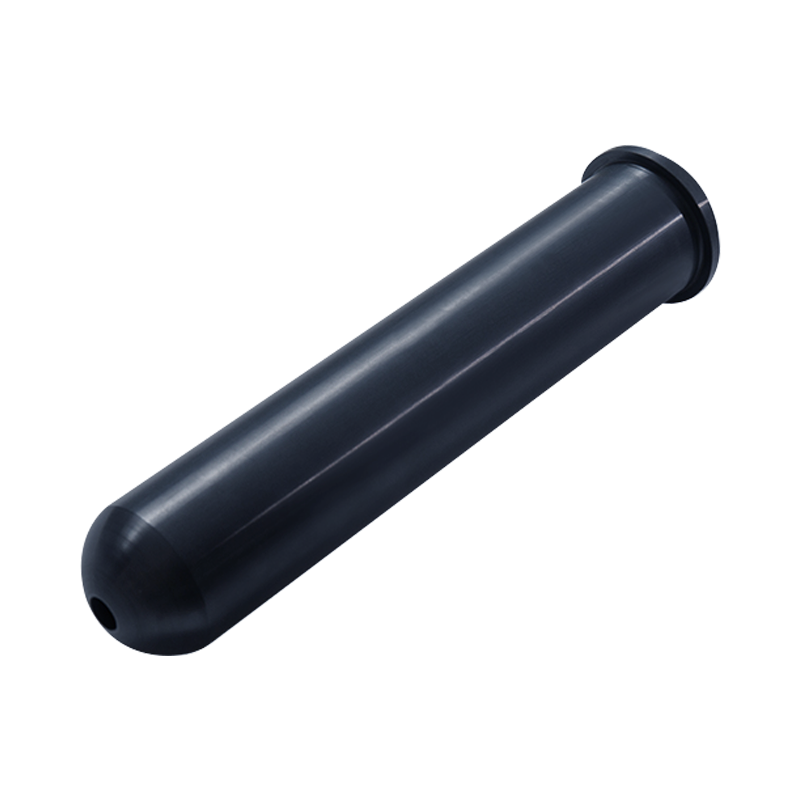
- End configurations: Standard tubes are supplied with plain cut ends. Closed-end tubes, flanged ends, threaded ends (produced by diamond grinding), and other custom end geometries are available from manufacturers offering machining services. Specify end configuration requirements at the ordering stage, as post-sintering machining of silicon nitride requires diamond tooling and adds significant lead time and cost if not planned from the start.
Handling, Installation, and Failure Mode Considerations
Silicon nitride tubes are significantly more damage-tolerant than most ceramic materials, but they remain brittle relative to metals and will fracture if subjected to impact, bending loads beyond their modulus of rupture, or improper installation stresses. Getting the most out of Si₃N₄ tubing in service requires attention to handling and installation practices that are straightforward once understood.
- Avoid point loading and edge contact. When supporting or clamping a silicon nitride tube, distribute the contact load over as large an area as possible using soft conforming materials — graphite felt, ceramic fiber, or compliant high-temperature gasket material. Point contact between the Si₃N₄ tube and a hard metal support concentrates stress at the contact point and can initiate surface cracks that propagate under thermal cycling.
- Allow for differential thermal expansion when fitting into metal assemblies. Silicon nitride has a lower coefficient of thermal expansion than most metals. A Si₃N₄ tube fitted into a steel or cast iron housing with no clearance allowance for thermal expansion will be put into compression as the metal housing expands faster during heat-up — potentially generating cracking loads at the tube ends. Design clearance fits that accommodate the differential expansion across the operating temperature range.
- Inspect incoming tubes for pre-existing defects. Before installing silicon nitride tubes in critical applications, inspect surfaces for chips, cracks, or grinding damage that could act as stress concentrators in service. Liquid penetrant inspection or dye penetrant testing can reveal surface-breaking defects not visible to the naked eye. Reject tubes with visible damage at cut ends or on outer surfaces before installation rather than after a premature failure in service.
- Understand that fatigue failure is less of a concern than in metals. Unlike metals, ceramics do not exhibit classical fatigue crack growth under cyclic mechanical loading — they either survive a given load or they fracture. The practical implication is that silicon nitride tubes that have been in service for thousands of thermal cycles without cracking are not accumulating fatigue damage in the metal sense; they will continue to perform until a load or defect exceeds the material's fracture toughness.
- Chemical compatibility should be verified for non-standard process environments. While silicon nitride has broad chemical resistance, it is attacked by hydrofluoric acid, hot concentrated phosphoric acid, and strong alkalis at elevated temperatures. For process environments outside the standard industrial applications where Si₃N₄ tubing has an established track record, request chemical compatibility data from the tube supplier before committing to a specification, particularly if the tube will be in prolonged contact with the process fluid rather than exposed only to process gases.
Hot Products
Contact Us for Quotes and Prices!
Just let us know what you want, and we will get in touch with you as soon as possible!

We will continue to develop and produce more advanced ceramic materials for the aluminum processing industry.
Scan the Mobile QR code
Contact
 +86-18501518842 / +86-13587222672
 +86-0572-2926332 / 2926337
 +86-0572-2926335
 [email protected] / [email protected] / [email protected]
 No.11 Building, South Taihu High-tech Intelligent Manufacturing Industrial Park, Wuxing District, Huzhou City, Zhejiang, China
Copyright© 2024 Zhejiang Shangguijuli Special Material Technology Co., Ltd. All Rights Reserved. Ceramic Material Supplier


