

Tel:+86-0572-2926332 / 2926337

E-mail:[email protected]
 REQUEST A QUOTE

 en
en  English
 简体中文
简体中文Silicon Nitride: What It Is, Why It's Special, and Where It's Actually Used
2026.05.13
Content
What Silicon Nitride Actually Is
Silicon nitride (Si3N4) is an advanced structural ceramic composed of silicon and nitrogen atoms bonded in a covalent crystal structure. Unlike most oxide ceramics — alumina, zirconia, and their relatives — silicon nitride belongs to the nitride ceramic family, which gives it a fundamentally different combination of properties. It is not a naturally occurring mineral in usable form; all silicon nitride used in engineering applications is synthetically produced, typically from silicon powder reacted with nitrogen at high temperature or from chemical precursors processed into fine powder before densification into solid parts.
The material has been in industrial use since the 1960s, when researchers identified it as a promising candidate for high-temperature turbine components that could replace metal alloys in gas engines. That original application never fully materialized at scale due to manufacturing challenges, but the research investment produced a deep understanding of the material that enabled its adoption across a much wider range of applications — from precision bearings to medical implants to semiconductor substrates — where its combination of hardness, toughness, thermal stability, and chemical resistance is genuinely difficult to replicate with any other material class.
The Properties That Make Silicon Nitride Stand Out
Silicon nitride's engineering appeal comes from a property combination that is unusual even among advanced ceramics. Most ceramics trade off toughness for hardness, or thermal resistance for machinability. Silicon nitride sits at a favorable position on multiple axes simultaneously, which is why it commands a significant price premium over more common ceramics and continues to attract engineering interest in demanding applications.
Mechanical Properties
Silicon nitride is exceptionally hard — Vickers hardness values typically fall in the range of 1,400–1,700 HV depending on grade and processing route — placing it well above most steels and tool steels, and comparable to cemented carbide in surface hardness. More importantly for structural applications, it combines this hardness with a fracture toughness of 5–8 MPa·m½, which is high for a ceramic. Conventional ceramics like alumina fracture at 3–4 MPa·m½; silicon nitride's interlocking elongated grain microstructure — particularly in sintered forms — acts as a crack deflection and bridging mechanism that resists catastrophic fracture propagation. This is the property that makes it viable in rolling contact bearings and cutting tool inserts where cyclic loading would shatter a more brittle ceramic.
Thermal Properties
Silicon nitride retains mechanical strength at elevated temperatures more effectively than most structural ceramics and virtually all engineering polymers. Flexural strength remains above 500 MPa at 1,000°C, and the material can sustain structural loads in environments up to approximately 1,200°C in non-oxidizing conditions. Its thermal conductivity — typically 15–30 W/m·K depending on grade — is moderate for a ceramic, useful for applications requiring heat dissipation without electrical conductivity. Of particular practical value is its low thermal expansion coefficient (approximately 3.2 × 10⁻⁶/°C), which gives it excellent thermal shock resistance: silicon nitride parts can be cycled rapidly between extreme temperatures without cracking, a behavior that makes it suitable for combustion-facing components and rapid thermal processing environments.
Chemical and Electrical Properties
Silicon nitride is chemically inert to most acids, alkalis, and organic solvents at room temperature and retains reasonable chemical resistance at elevated temperatures. It resists oxidation in air up to approximately 1,000°C, above which a surface silica passivation layer forms that slows but does not prevent further oxidation. It does not react with molten non-ferrous metals — aluminum, copper, and zinc alloys — making it useful as a contact material in metal casting and processing equipment. Electrically, silicon nitride is an insulator with a dielectric constant of approximately 7–9 and high dielectric breakdown strength, properties that make it relevant in microelectronics and power electronics packaging where electrical isolation at high temperature is required.
Key Property Summary
| Property | Typical Value | Significance |
| Density | 3.1–3.3 g/cm³ | 40% lighter than steel; enables high-speed rotating components |
| Hardness (Vickers) | 1,400–1,700 HV | Exceptional wear resistance in sliding and rolling contact |
| Flexural Strength | 700–1,000 MPa | High structural load capacity for a ceramic |
| Fracture Toughness | 5–8 MPa·m½ | Crack-resistant; tolerates impact better than most ceramics |
| Max Use Temperature | ~1,200°C (inert atmosphere) | Retains strength well above metals and polymers |
| Thermal Expansion | 3.2 × 10⁻⁶/°C | Low expansion; excellent thermal shock resistance |
| Thermal Conductivity | 15–30 W/m·K | Useful heat dissipation without electrical conductivity |
Manufacturing Routes and How They Affect Performance
Silicon nitride parts are not all made the same way, and the manufacturing route has a direct and significant effect on the microstructure, density, and resulting mechanical properties of the finished component. Understanding the main processing routes helps explain why silicon nitride from different sources — or produced by different methods — can perform quite differently in service despite being nominally the same material.
Reaction Bonded Silicon Nitride (RBSN)
Reaction bonded silicon nitride is produced by shaping silicon powder into the desired form — by pressing, casting, or machining — and then firing it in a nitrogen atmosphere at around 1,200–1,400°C. The silicon reacts with the nitrogen to form Si3N4 in situ, with essentially no dimensional change during the conversion. This near-net-shape capability is a significant manufacturing advantage: complex geometries can be formed in the green (pre-fired) state and converted to ceramic without the shrinkage that complicates other densification routes. The trade-off is porosity: RBSN parts typically retain 15–25% residual porosity, which limits their mechanical strength compared to fully dense grades. RBSN is used where near-net-shape fabrication matters more than maximum strength — large structural components, thermal processing fixtures, and components where finish machining of a dense ceramic would be prohibitively expensive.
Hot Pressed Silicon Nitride (HPSN)
Hot pressing combines heat and uniaxial pressure simultaneously to densify silicon nitride powder mixed with sintering additives — typically MgO, Al2O3, Y2O3, or combinations thereof — into a fully dense compact. The sintering additives form a liquid phase at processing temperature that fills pores and promotes grain boundary bonding, producing a microstructure with near-zero porosity and consequently the highest mechanical properties available in the silicon nitride family. HPSN achieves flexural strengths above 800 MPa and fracture toughness at the upper end of the Si3N4 range. The limitation is geometry: hot pressing is a uniaxial process that produces flat billets or simple shapes, which must then be finish-ground to final dimensions. Complex three-dimensional parts are not practical via HPSN without extensive and expensive post-processing.
Gas Pressure Sintering and HIP
Gas pressure sintering (GPS) and hot isostatic pressing (HIP) extend the densification approach of hot pressing to more complex geometries. In GPS, parts are sintered at elevated temperature under high nitrogen gas pressure (up to 100 bar), which suppresses Si3N4 decomposition at sintering temperature and allows full densification with sintering aids. HIP subjects pre-sintered parts to isostatic gas pressure at high temperature, closing residual porosity uniformly regardless of geometry. Both routes produce fully dense silicon nitride components with properties approaching HPSN in complex near-net shapes, enabling the bearing balls, cutting inserts, and precision components that represent the high-value end of the Si3N4 market. GPS and HIP parts are still ground to final dimensions after sintering, since the dimensional control of ceramic powder forming processes is not precise enough for the tolerances required in bearing or cutting tool applications.
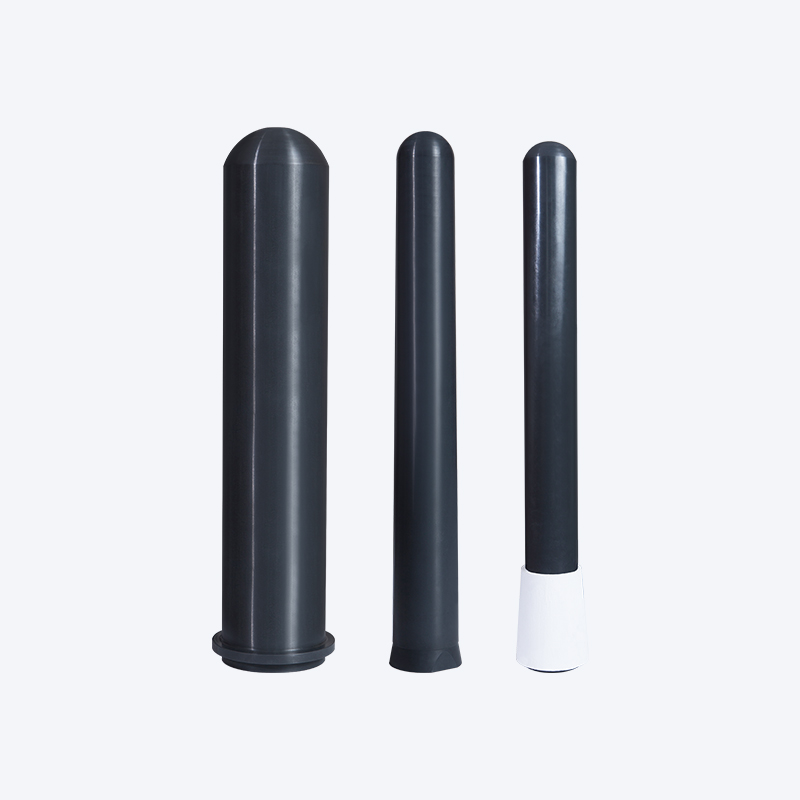
Where Silicon Nitride Is Actually Used
Silicon nitride ceramic material has found genuine commercial adoption in a set of applications where its specific property combination — particularly the hardness-toughness balance, thermal performance, and low density — provides an advantage that justifies its cost premium over metals and conventional ceramics. These are not theoretical use cases; they represent established, volume markets for Si3N4 components.
Precision Bearings
Silicon nitride bearing balls and rollers are the highest-volume application for dense Si3N4 components. The combination of high hardness, low density (approximately 40% lighter than bearing steel), electrical insulation, and excellent rolling contact fatigue resistance makes Si3N4 balls the preferred choice for hybrid bearings — bearings with ceramic balls running in steel races — in demanding applications. In machine tool spindles, Si3N4 hybrid bearings enable higher rotational speeds than all-steel bearings because the lighter balls generate less centrifugal force on the outer race at speed, reducing heat generation and extending bearing life. In electric motors and generators, ceramic balls eliminate the electrical pitting damage that occurs in all-steel bearings when stray currents pass through the bearing. Wind turbine generators, electric vehicle drivetrains, railway traction motors, and semiconductor manufacturing equipment all use silicon nitride hybrid bearings in volume.
Cutting Tools and Inserts
Silicon nitride cutting tool inserts are used for high-speed dry machining of cast iron, hardened steel, and nickel superalloys — materials where the combination of high cutting temperature and abrasive wear would rapidly degrade conventional carbide tooling. Si3N4 inserts maintain hardness at the elevated temperatures generated in high-speed cutting (600–900°C at the cutting edge is typical) and resist the thermal shock of interrupted cuts and coolant contact better than most competing ceramic tool materials. For grey cast iron machining in automotive component production — engine blocks, brake discs, brake drums — silicon nitride inserts are the established choice at cutting speeds that would be impractical with carbide. The insert geometry is typically negative rake to manage the brittle fracture risk inherent in ceramic cutting tools, and grades are tailored with sintering additives to optimize the toughness-hardness balance for the target material.
Automotive and Engine Components
The automotive industry uses silicon nitride in several high-temperature and wear-critical components. Turbocharger rotors in passenger and commercial vehicles benefit from Si3N4's low density — a ceramic rotor has roughly one-third the rotational inertia of an equivalent steel rotor, which reduces turbo lag significantly — combined with its high-temperature strength and resistance to hot gas corrosion. Diesel engine glow plugs use silicon nitride heating elements because the material can reach operating temperature faster than conventional metallic elements and withstands the thermal cycling of repeated cold starts over the engine's life. Valve train components including cam followers and valve seat inserts in high-performance engines use Si3N4 for wear resistance in dry or marginally lubricated contact conditions.
Electronics and Semiconductor Applications
In microelectronics, silicon nitride thin films deposited by chemical vapor deposition (CVD) are a fundamental material in semiconductor device fabrication — used as diffusion barriers, gate dielectrics, passivation layers, and etch masks in integrated circuit manufacturing. This thin-film application is chemically the same material as bulk Si3N4 but processed at nanometer to micrometer thickness scales rather than as a structural ceramic. In power electronics packaging, bulk silicon nitride substrates are used as electrically insulating, thermally conducting bases for high-power semiconductor modules in electric vehicle inverters and industrial power converters, where the combination of high thermal conductivity, electrical insulation, and matched thermal expansion to silicon and copper is difficult to achieve with alumina or aluminum nitride alone.
Medical and Biomedical Uses
Silicon nitride has attracted significant research and commercial interest in orthopedic implant applications, particularly spinal fusion devices and joint replacement components. Its biocompatibility is well-documented — Si3N4 does not elicit adverse tissue responses and has demonstrated bacteriostatic surface properties in vitro, meaning bacteria adhere and proliferate on it less readily than on titanium or PEEK polymer surfaces. The material's combination of compressive strength, fatigue resistance, and radiolucency (it does not show up on X-rays, which allows clearer post-operative imaging of bone healing) gives it practical advantages over both metal and polymer implant materials in specific applications. FDA-cleared silicon nitride spinal implants have been in clinical use since the 2000s, representing one of the few structural ceramic materials to achieve regulatory approval for permanent human implantation.
Silicon Nitride vs Other Advanced Ceramics
Silicon nitride does not exist in a vacuum — it competes with and complements other advanced ceramic materials depending on the application requirements. Understanding where Si3N4 fits relative to its closest alternatives helps clarify when it is the right choice and when a less expensive material may be adequate.
- vs Alumina (Al2O3): Alumina is significantly cheaper and more widely available, but its fracture toughness (3–4 MPa·m½) and thermal shock resistance are substantially lower than silicon nitride. For applications involving mechanical loading, impact risk, or thermal cycling, Si3N4 is the more reliable choice despite the cost premium. For static electrical insulation or chemical containment at moderate temperatures, alumina is usually adequate and more cost-effective.
- vs Zirconia (ZrO2): Zirconia has higher fracture toughness than silicon nitride in its toughened forms (8–12 MPa·m½) but lower hardness and significantly worse high-temperature performance — zirconia undergoes a phase transformation around 1,000°C that can cause structural failure. Si3N4 is the preferred choice for high-temperature structural applications; zirconia is preferred for room-temperature wear applications where maximum toughness at modest hardness is needed, and in dental ceramics where its white color and translucency are valuable.
- vs Silicon Carbide (SiC): Silicon carbide has higher thermal conductivity and higher temperature capability than silicon nitride but lower fracture toughness and more restricted fabrication options. SiC is preferred in applications requiring maximum thermal conductivity (heat exchangers, semiconductor substrates) or extreme temperature resistance above 1,200°C; Si3N4 is preferred where mechanical reliability under load, impact, or thermal shock is the priority.
- vs Cemented Carbide (WC-Co): Cemented carbide has higher fracture toughness than silicon nitride and easier fabrication, but it is denser (approximately 14–15 g/cm³ vs 3.2 g/cm³), contains strategic-material cobalt binder, and loses hardness more rapidly at elevated temperatures. Si3N4 is preferred in cutting tools for high-speed dry machining where temperature resistance matters; carbide dominates in general-purpose machining and interrupted cuts at moderate speeds where toughness requirements are highest.
Practical Considerations When Specifying Silicon Nitride
For engineers and procurement teams specifying silicon nitride components for the first time, the material's performance potential can only be realized if the specification, supplier qualification, and design approach address the constraints specific to ceramic components. Several practical points are worth understanding before committing to a Si3N4 design.
Silicon nitride cannot be fabricated by the processes used for metals. It cannot be melted and cast, welded, or significantly cold-worked. All shaping happens either in the powder or green ceramic state before sintering, or by diamond grinding after sintering — both of which are slower and more expensive than machining steel. Design for ceramic manufacturing means minimizing sharp internal corners (stress concentrators that initiate fracture), avoiding thin sections, and recognizing that tolerances achievable in ceramics are generally less tight than precision metal machining without expensive finish grinding. Work with the supplier's applications engineering team during the design phase rather than after the geometry is fixed.
Batch-to-batch consistency requires attention to supplier qualification and incoming inspection for critical applications. Advanced ceramic properties are sensitive to raw material purity, powder characteristics, sintering atmosphere, and thermal cycle control. A qualified silicon nitride supplier for bearing or aerospace applications will provide material certifications, density measurements, and hardness data with each batch; specifying these requirements in the purchase contract rather than assuming they will be provided by default protects against quality drift over time. For life-critical applications — implants, aerospace structural components, high-speed rotating parts — proof testing individual components to a percentage of their expected service load is standard practice in ceramic component qualification.
Hot Products
Contact Us for Quotes and Prices!
Just let us know what you want, and we will get in touch with you as soon as possible!

We will continue to develop and produce more advanced ceramic materials for the aluminum processing industry.
Scan the Mobile QR code
Contact
 +86-18501518842 / +86-13587222672
 +86-0572-2926332 / 2926337
 +86-0572-2926335
 [email protected] / [email protected] / [email protected]
 No.11 Building, South Taihu High-tech Intelligent Manufacturing Industrial Park, Wuxing District, Huzhou City, Zhejiang, China
Copyright© 2024 Zhejiang Shangguijuli Special Material Technology Co., Ltd. All Rights Reserved. Ceramic Material Supplier


