

Tel:+86-0572-2926332 / 2926337

E-mail:[email protected]
 REQUEST A QUOTE

 en
en  English
 简体中文
简体中文Silicon Nitride Degassing Rotors: Principles, Advantages, and Operation Guidelines
2026.05.20
Content
- 1 What Is a Silicon Nitride Degassing Rotor and Why Does It Matter?
- 2 Why Silicon Nitride Outperforms Other Rotor Materials
- 3 Key Material Properties That Make Si₃N₄ Ideal for Degassing
- 4 How the Degassing Process Works with a Silicon Nitride Rotor
- 5 Silicon Nitride Degassing Rotor Design Variations and Configurations
- 6 Practical Tips for Operating and Maintaining Si₃N₄ Degassing Rotors
- 7 Industries and Applications Where Silicon Nitride Degassing Rotors Are Used
- 8 How to Select the Right Silicon Nitride Degassing Rotor for Your Operation
What Is a Silicon Nitride Degassing Rotor and Why Does It Matter?
A silicon nitride degassing rotor is a rotating component used in the aluminum casting and foundry industry to remove dissolved hydrogen gas and other impurities from molten aluminum before it is cast into its final shape. The rotor spins at high speed inside the molten metal, breaking gas introduced through a hollow shaft into millions of tiny bubbles. These bubbles rise through the melt, attracting dissolved hydrogen and non-metallic inclusions on their way up, and carry them out of the liquid metal at the surface — a process called rotary degassing or inline degassing.
The choice of rotor material is critical because the component must survive direct, prolonged contact with molten aluminum at temperatures typically ranging from 680°C to 780°C (1256°F to 1436°F). Silicon nitride (Si₃N₄) has emerged as the dominant material for high-performance degassing rotors because of its exceptional combination of thermal stability, chemical resistance to molten aluminum, mechanical strength at elevated temperatures, and low wettability — meaning molten aluminum does not stick to or react with its surface the way it does with metals or many other ceramics.
In practical terms, switching from graphite or other ceramic rotor materials to a silicon nitride degassing rotor typically extends service life by two to five times, reduces contamination of the melt, and produces cleaner aluminum with fewer porosity defects — all of which directly impact the quality and yield of the finished castings.
Why Silicon Nitride Outperforms Other Rotor Materials
To understand why silicon nitride has become the material of choice for aluminum degassing rotors, it helps to compare it against the alternatives that foundries have historically used — primarily graphite and other oxide-based ceramics like alumina or silicon carbide composites.
Silicon Nitride vs. Graphite Rotors
Graphite was the original material for degassing rotors and is still used in many lower-volume or budget-conscious foundry operations. It is easy to machine, inexpensive, and thermally conductive. However, graphite oxidizes at operating temperatures — it gradually burns away in the presence of oxygen — which means graphite rotors have a limited and unpredictable service life, typically measured in dozens of hours. As graphite wears, carbon particles can contaminate the melt, introducing inclusions that compromise the mechanical properties of the final casting. Silicon nitride does not oxidize in this way and leaves no carbon contamination in the aluminum.
Silicon Nitride vs. Other Ceramic Rotors
Alumina (Al₂O₃) and silicon carbide (SiC) ceramics have also been used for degassing components, but both have significant drawbacks in molten aluminum environments. Alumina is chemically attacked by aluminum alloys containing magnesium, which reduces its surface integrity over time. Silicon carbide, while hard and thermally conductive, can react with aluminum at high temperatures and is more prone to thermal shock cracking during sudden temperature changes — such as when the rotor is first immersed in the melt. Silicon nitride combines superior thermal shock resistance with chemical inertness toward virtually all aluminum alloy compositions, including magnesium-containing alloys, making it the most universally applicable material.
| Property | Silicon Nitride | Graphite | Alumina | Silicon Carbide |
| Oxidation Resistance | Excellent | Poor | Good | Good |
| Thermal Shock Resistance | Excellent | Good | Moderate | Moderate |
| Chemical Resistance to Al Alloys | Excellent | Moderate | Poor (Mg alloys) | Moderate |
| Non-Wettability by Aluminum | Excellent | Good | Moderate | Moderate |
| Service Life | Very Long | Short | Moderate | Moderate |
| Melt Contamination Risk | Very Low | High (carbon) | Moderate | Moderate |
Key Material Properties That Make Si₃N₄ Ideal for Degassing
Silicon nitride is not a single uniform material — it comes in several grades and processing variants, with the most common being reaction-bonded silicon nitride (RBSN) and hot-pressed or sintered silicon nitride (SSN/HPSN). For degassing rotor applications, sintered silicon nitride is generally preferred due to its higher density and superior mechanical properties. Understanding the specific material characteristics explains why Si₃N₄ degassing rotors perform so reliably in extreme molten metal environments.
Thermal Shock Resistance
When a degassing rotor is inserted into a crucible of molten aluminum at 700°C+, it experiences an extreme and sudden temperature change. Materials with poor thermal shock resistance — which includes most metals and many oxide ceramics — develop internal stress cracks under these conditions and can fail catastrophically. Silicon nitride has a uniquely low thermal expansion coefficient combined with high thermal conductivity and fracture toughness, which together allow it to absorb sudden thermal gradients without cracking. This is one of the most important properties for a degassing rotor because the component undergoes this thermal shock repeatedly every operating cycle.
High-Temperature Mechanical Strength
Many materials that are strong at room temperature lose significant strength at elevated temperatures. Silicon nitride retains its flexural strength and hardness at temperatures well above 1000°C — far exceeding the operating temperatures of aluminum degassing applications. This means the rotor blades and shaft do not deform, sag, or fatigue under the mechanical loads imposed by high-speed rotation in the dense molten metal environment, even after hundreds of operating hours.
Chemical Inertness to Molten Aluminum
Molten aluminum is chemically aggressive. It reacts with many metals (causing dissolution or alloying) and with certain ceramics (causing surface degradation or spalling). Silicon nitride forms a stable, passive surface layer in the presence of molten aluminum and does not dissolve or react with the melt under normal operating conditions. This chemical stability prevents rotor material from entering the aluminum — critical in applications where aluminum cleanliness directly determines the mechanical properties of the final part, such as in aerospace or automotive structural castings.
Low Wettability and Non-Stick Surface
Silicon nitride has a naturally low wettability with molten aluminum, meaning the liquid metal does not spread across or bond to its surface easily. This property is important for two reasons: it prevents aluminum buildup (called "skull") from forming on the rotor surface, which would change the rotor's geometry and disrupt bubble formation; and it makes post-use cleaning significantly easier, reducing downtime between heats.
How the Degassing Process Works with a Silicon Nitride Rotor
Understanding the actual degassing process helps clarify why rotor design and material selection are so consequential for final aluminum quality. The rotary degassing process using a Si₃N₄ rotor follows a consistent sequence in foundry operations:
- Gas introduction: An inert gas — typically argon or nitrogen, sometimes a mixture — is fed through a hollow shaft connected to the silicon nitride rotor. The gas travels down through the shaft and exits at the rotor head submerged in the molten aluminum.
- Bubble dispersion: The spinning rotor — typically rotating at 200 to 600 RPM depending on the process — shears the gas stream into extremely fine bubbles. The finer the bubbles, the greater the total surface area in contact with the melt, and the more efficient the degassing action.
- Hydrogen absorption: As the fine inert gas bubbles rise through the melt, dissolved hydrogen (which has a much higher partial pressure in the aluminum than in the inert gas bubbles) diffuses from the melt into the bubbles by concentration gradient.
- Inclusion flotation: Non-metallic inclusions — oxides, carbides, and other solid particles — attach to the rising bubbles and are carried to the melt surface, where they accumulate in the dross layer and can be skimmed off.
- Degassing completion: After a treatment time typically ranging from 5 to 20 minutes depending on melt volume and initial hydrogen content, the rotor is withdrawn, and the dross is removed. The treated aluminum is then cast with significantly reduced porosity risk.
The silicon nitride rotor's role in this process is to generate and sustain the fine bubble cloud throughout the treatment cycle. Its durability ensures consistent bubble dispersion geometry over hundreds of cycles without the geometric degradation that affects graphite rotors as they erode.
Silicon Nitride Degassing Rotor Design Variations and Configurations
Not all Si₃N₄ degassing rotors are the same shape. The rotor head geometry significantly affects how efficiently gas is dispersed through the melt, and manufacturers offer several design configurations to suit different furnace sizes, alloy types, and production requirements.
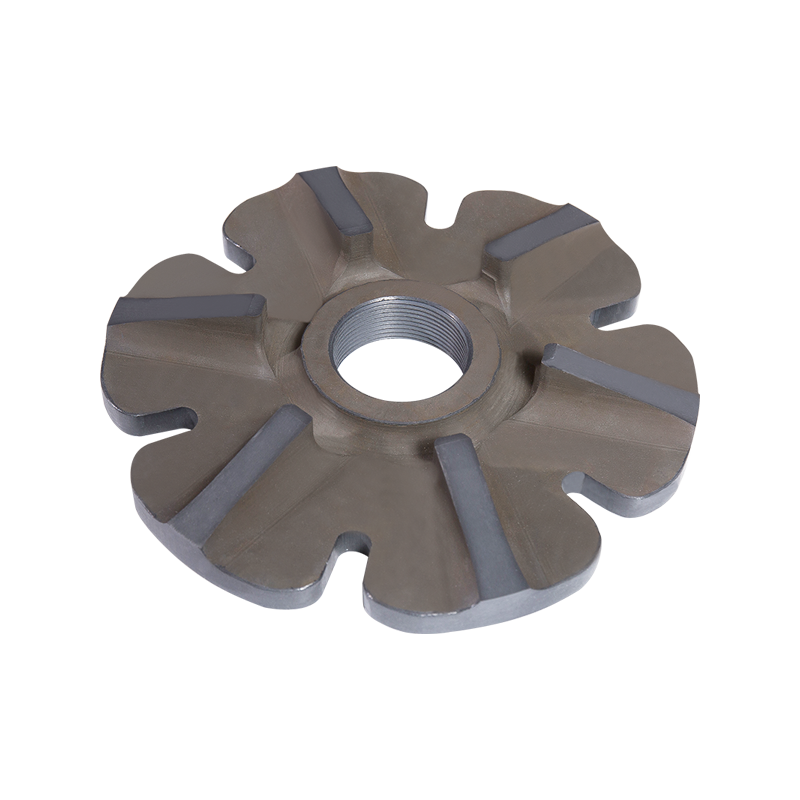
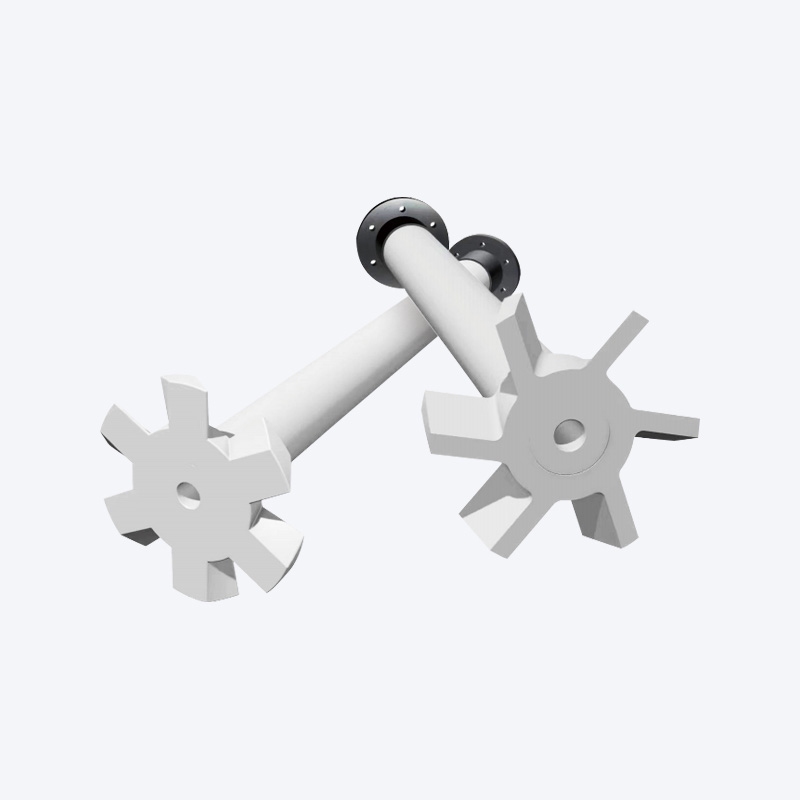
Impeller-Style Rotor Heads
The most common design features a rotor head with radial vanes or impeller blades extending outward from a central hub. As the rotor spins, these blades create centrifugal flow in the melt that distributes gas bubbles outward and downward from the rotor, maximizing the volume of aluminum treated in each cycle. Impeller designs are the most efficient for large-volume degassing in holding furnaces and transfer ladles.
Disc-Style Rotor Heads
Disc rotors have a simpler flat or slightly convex head with gas exit ports around the perimeter. They produce a more uniform bubble size distribution and are often preferred for smaller treatment volumes or where melt turbulence must be minimized to avoid surface oxidation. Disc designs are common in inline degassing units installed in casting transfer systems.
Rotor Shaft Assemblies
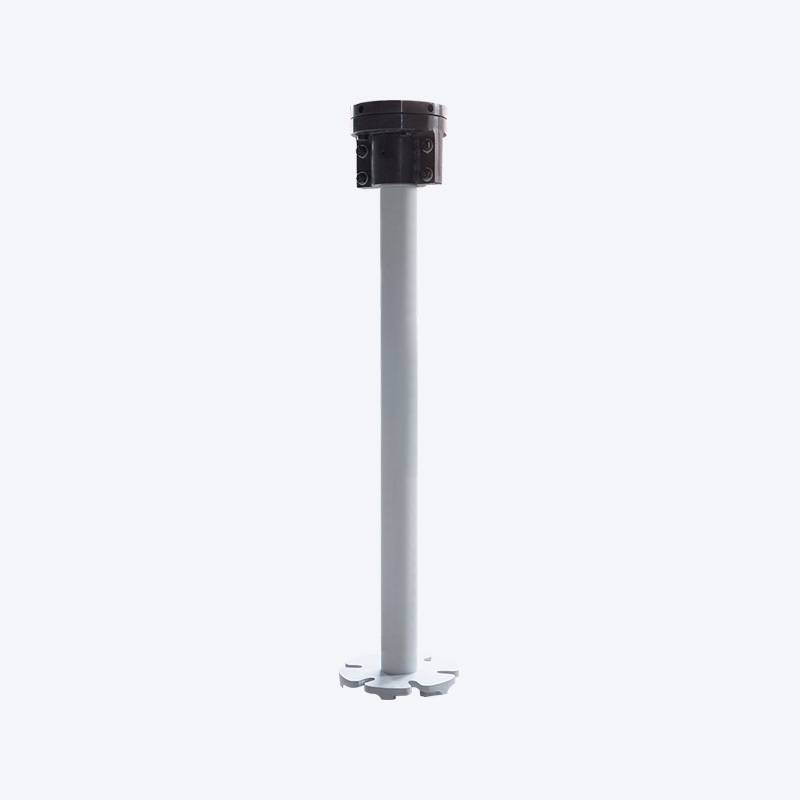
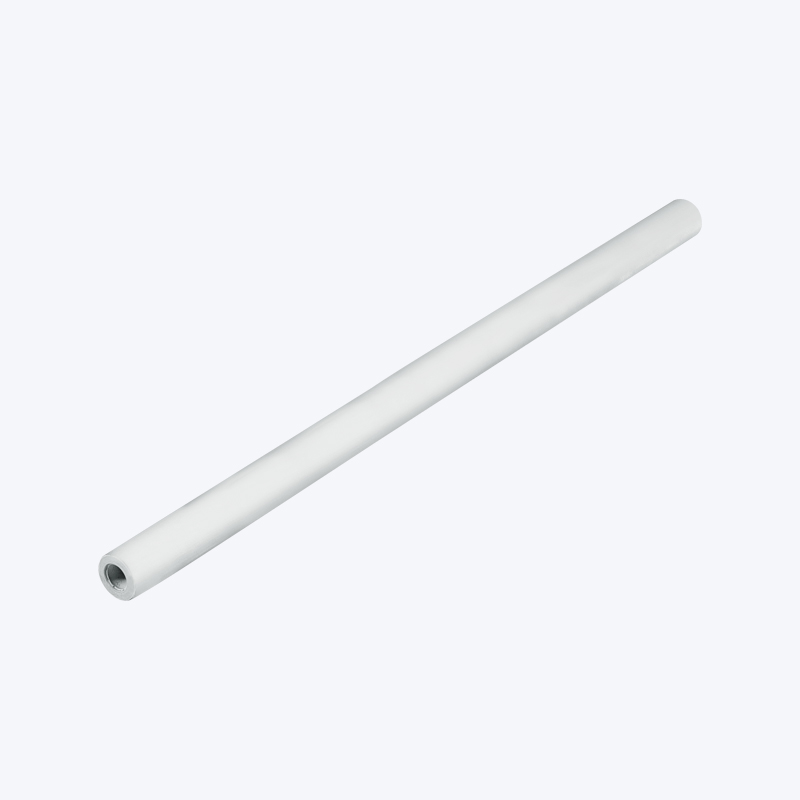
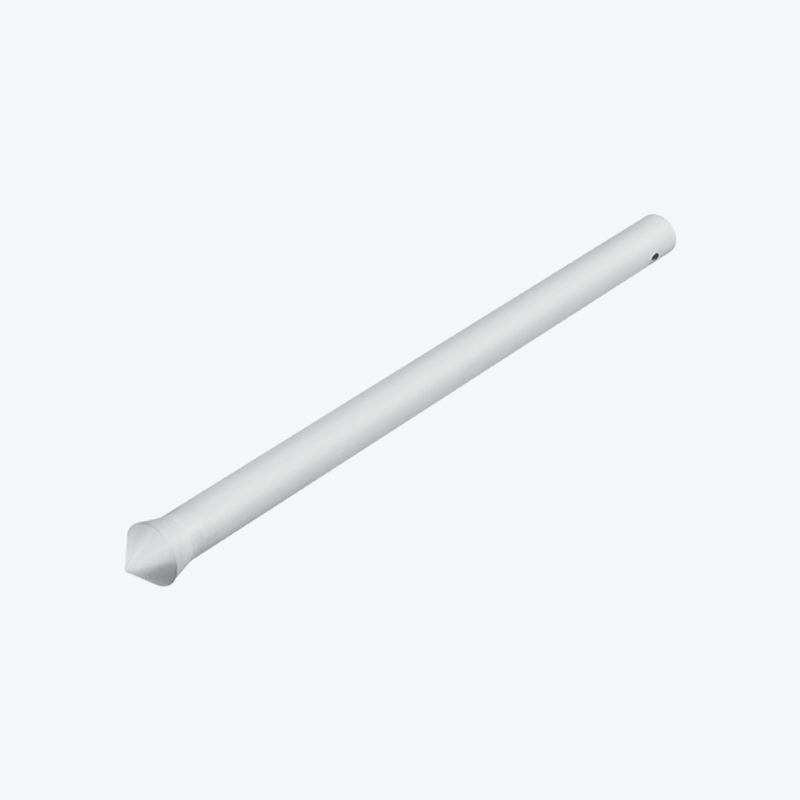
The rotor shaft — which connects the spinning rotor head to the drive motor above the furnace — is also commonly made from silicon nitride or from other high-temperature ceramics such as fused silica or composite materials. Silicon nitride shafts offer the same chemical and thermal advantages as the rotor head, creating a fully inert assembly from tip to coupling. Some configurations use a silicon nitride rotor head paired with a graphite or ceramic composite shaft to balance cost and performance.
Practical Tips for Operating and Maintaining Si₃N₄ Degassing Rotors
Even the best silicon nitride degassing rotor will fail prematurely if it is handled or operated incorrectly. The following practices help maximize rotor service life and degassing performance:
- Preheat the rotor before immersion: Although silicon nitride has excellent thermal shock resistance compared to other ceramics, it is still good practice to preheat the rotor assembly to 200–400°C before immersing it in the melt. This reduces the magnitude of the thermal gradient on first contact and extends rotor life, especially for larger diameter rotors.
- Start gas flow before immersion: Always begin flowing inert gas through the shaft before the rotor enters the melt. This prevents molten aluminum from being drawn up into the gas channels by vacuum effect, which can cause blockages and uneven bubble distribution.
- Set correct rotation speed: Too slow and bubbles will be large and inefficient; too fast and excessive melt turbulence will cause surface oxidation and re-contamination. Most aluminum degassing applications use 300–500 RPM — follow the equipment manufacturer's recommendation for your specific rotor diameter and furnace geometry.
- Inspect rotor geometry regularly: Even silicon nitride rotors wear gradually at the blade tips and gas exit ports over extended use. Regular visual inspection identifies asymmetric wear that can cause vibration, which in turn accelerates shaft and bearing wear in the drive unit.
- Remove aluminum buildup promptly: Despite silicon nitride's low wettability, some aluminum may adhere to the rotor over time. Remove this buildup carefully using a soft metal scraper or by soaking in a mild chemical cleaner — never use impact tools that could chip or crack the ceramic surface.
- Store rotors carefully: Silicon nitride is hard but brittle — it cannot absorb impact the way metals can. Store rotors upright or in padded holders, and never drop or knock them against hard surfaces during handling.
Industries and Applications Where Silicon Nitride Degassing Rotors Are Used
While the aluminum foundry industry is the primary user of silicon nitride degassing rotors, the applications span a broad range of sectors where molten aluminum quality is critical to end-product performance.
Automotive Casting
Automotive components such as engine blocks, cylinder heads, wheels, suspension knuckles, and transmission housings are cast from aluminum alloys that must meet strict porosity and mechanical property standards. Even small hydrogen-induced voids in these parts can cause fatigue failure under cyclic loading. Silicon nitride rotor degassing is standard practice in high-volume automotive aluminum die casting and permanent mold casting facilities.
Aerospace Structural Components
Aerospace applications demand the highest possible aluminum cleanliness. Aircraft structural castings, aerospace-grade billets, and investment cast turbine components are processed with rigorous degassing protocols using Si₃N₄ rotors to achieve the ultra-low hydrogen levels required by aerospace material specifications such as AMS and ASTM standards.
Aluminum Billet and Ingot Production
Primary aluminum smelters and secondary aluminum recyclers use inline degassing units equipped with silicon nitride rotors as part of their continuous casting lines. These inline degassers treat large volumes of aluminum continuously as it flows from the holding furnace to the casting equipment, ensuring consistent hydrogen levels across entire production runs of billet, slab, or ingot.
Electronics and Precision Components
Electronic heat sinks, precision instrument housings, and optical equipment components cast from aluminum require defect-free surfaces and cross-sections. These applications often use smaller, batch-format degassing units with Si₃N₄ rotors to treat smaller melt quantities to very high cleanliness standards before investment casting or low-pressure die casting.
How to Select the Right Silicon Nitride Degassing Rotor for Your Operation
Choosing the correct Si₃N₄ degassing rotor requires matching the rotor's specifications to your specific process parameters. Here are the key factors to evaluate:
- Rotor diameter: Larger diameter rotors disperse bubbles over a wider area and are suited to larger crucibles or furnaces. Smaller diameter rotors are appropriate for compact treatment units or ladles. Rotor diameter should be matched to the equipment specifications provided by your degassing unit manufacturer.
- Shaft length: The shaft must be long enough to position the rotor head at the correct depth in the melt — typically near the bottom third of the crucible — while keeping the drive coupling well above the melt surface. Custom shaft lengths are available from most Si₃N₄ rotor suppliers.
- Alloy compatibility: While silicon nitride is resistant to virtually all aluminum alloys, confirm compatibility if you are processing high-magnesium alloys (above 3% Mg) or alloys containing lithium, which can be more chemically aggressive than standard aluminum-silicon or aluminum-copper alloys.
- Si₃N₄ grade and density: Request material certification from the supplier specifying the silicon nitride grade, density, and flexural strength. High-density sintered Si₃N₄ (density ≥ 3.2 g/cm³) offers superior performance over reaction-bonded grades in the most demanding high-temperature applications.
Hot Products
Contact Us for Quotes and Prices!
Just let us know what you want, and we will get in touch with you as soon as possible!

We will continue to develop and produce more advanced ceramic materials for the aluminum processing industry.
Scan the Mobile QR code
Contact
 +86-18501518842 / +86-13587222672
 +86-0572-2926332 / 2926337
 +86-0572-2926335
 [email protected] / [email protected] / [email protected]
 No.11 Building, South Taihu High-tech Intelligent Manufacturing Industrial Park, Wuxing District, Huzhou City, Zhejiang, China
Copyright© 2024 Zhejiang Shangguijuli Special Material Technology Co., Ltd. All Rights Reserved. Ceramic Material Supplier


