

Tel:+86-0572-2926332 / 2926337

E-mail:[email protected]
 REQUEST A QUOTE

 en
en  English
 简体中文
简体中文Silicon Nitride Material: Properties, Types, Applications, and Why Engineers Love It
2026.03.11
Content
- 1 What Is Silicon Nitride Material?
- 2 Key Properties of Silicon Nitride
- 3 Types and Manufacturing Methods of Si₃N₄ Ceramics
- 4 How Silicon Nitride Compares to Other Advanced Ceramics
- 5 Major Applications of Silicon Nitride Material
- 6 Machining and Fabrication Considerations
- 7 What to Check When Sourcing Silicon Nitride Material
What Is Silicon Nitride Material?
Silicon nitride material is an advanced structural ceramic compound with the chemical formula Si₃N₄. It belongs to the family of non-oxide technical ceramics and is widely regarded as one of the most versatile and high-performing engineering ceramics available today. Unlike traditional ceramics that are brittle and prone to catastrophic fracture, silicon nitride combines high strength, excellent fracture toughness, outstanding thermal shock resistance, and low density into a single material — a combination that no metal or polymer can replicate across the same range of operating conditions.
The Si₃N₄ ceramic structure consists of strong covalent silicon-nitrogen bonds arranged in a tightly interlocked network of elongated grains. This microstructure is the key to silicon nitride's mechanical superiority over other ceramics: the elongated grains act as crack deflectors and crack bridgers, absorbing fracture energy and preventing the rapid crack propagation that makes conventional ceramics so vulnerable to impact and thermal stress. The result is a ceramic that behaves more like a tough engineering material than a fragile traditional ceramic.
Silicon nitride material has been in commercial use since the 1970s, initially in gas turbine and cutting tool applications, and has since expanded into bearings, semiconductor processing equipment, medical implants, automotive components, and a growing range of high-performance industrial applications. Its combination of properties that no single metal, polymer, or competing ceramic can fully replicate continues to drive adoption wherever extreme performance conditions must be met reliably and consistently.
Key Properties of Silicon Nitride
Understanding why silicon nitride is specified for demanding applications requires a close look at its actual measured properties. The following table presents the key mechanical, thermal, and physical characteristics of dense sintered Si₃N₄ compared to common reference values:
| Property | Typical Value (Dense Si₃N₄) | Notes |
| Density | 3.1 – 3.3 g/cm³ | ~40% lighter than steel |
| Flexural Strength | 700 – 1,000 MPa | Higher than alumina and most engineering ceramics |
| Fracture Toughness (KIC) | 5 – 8 MPa·m½ | Among highest of all structural ceramics |
| Vickers Hardness | 1,400 – 1,800 HV | Harder than hardened tool steel |
| Young's Modulus | 280 – 320 GPa | Higher stiffness than most metals |
| Thermal Conductivity | 15 – 80 W/m·K | Wide range depending on grade and sintering aids |
| Coefficient of Thermal Expansion | 2.5 – 3.5 × 10⁻⁶/K | Very low — excellent thermal shock resistance |
| Max Service Temperature | Up to 1,400°C (in non-oxidizing) | Retains strength well above most metal limits |
| Thermal Shock Resistance | ΔT up to 500°C without failure | Best of all structural ceramics |
| Electrical Resistivity | >10¹² Ω·cm | Excellent electrical insulator |
| Chemical Resistance | Excellent | Resists most acids, alkalis, and molten metals |
The property that most distinguishes silicon nitride from competing structural ceramics is its fracture toughness. At 5–8 MPa·m½, Si₃N₄ is two to three times tougher than alumina (Al₂O₃) and significantly tougher than silicon carbide (SiC). This toughness, combined with high strength retained at elevated temperature and the lowest thermal expansion coefficient of any structural ceramic, makes it the preferred material in applications where thermal cycling, impact loading, or sudden temperature changes would crack or degrade other ceramics.
Types and Manufacturing Methods of Si₃N₄ Ceramics
Silicon nitride material is not a single product — it encompasses several distinct manufacturing grades, each produced by a different process and offering a different balance of properties, density, complexity of achievable shapes, and cost. Choosing the right grade is essential for both performance and economics.
Reaction Bonded Silicon Nitride (RBSN)
Reaction bonded silicon nitride is produced by forming a green body from silicon powder, then firing it in a nitrogen atmosphere. The silicon reacts with nitrogen to form Si₃N₄ in situ, with virtually no dimensional change during the reaction. This near-net-shape capability is RBSN's principal advantage — complex shapes can be machined from the silicon preform before nitriding, and the finished ceramic component requires little or no costly diamond grinding. The trade-off is that RBSN is inherently porous (typically 20–25% porosity) because the nitridation reaction does not fully densify the material. This porosity limits its strength, hardness, and chemical resistance compared to dense Si₃N₄ grades. RBSN is used where complex geometry, low cost, or large component size makes dense sintering impractical.
Sintered Silicon Nitride (SSN) and Gas Pressure Sintered (GPS-Si₃N₄)
Sintered silicon nitride is produced by pressing Si₃N₄ powder with small amounts of sintering aids — typically yttria (Y₂O₃) and alumina (Al₂O₃) — and firing at temperatures of 1,700–1,800°C. The sintering aids form a grain boundary glass phase that allows densification to near-theoretical density. Gas pressure sintering (GPS) applies an overpressure of nitrogen gas during sintering, which suppresses the decomposition of Si₃N₄ at high temperature and allows full densification to be achieved. SSN and GPS Si₃N₄ are the most widely used forms of silicon nitride in demanding structural applications, offering the best combination of strength, toughness, and chemical resistance available in the material. They are the grade standard for silicon nitride bearings, cutting tools, and high-performance engine components.
Hot Pressed Silicon Nitride (HPSN)
Hot pressed silicon nitride is produced by sintering under simultaneous high pressure (typically 20–30 MPa) and temperature. The combined pressure and heat drive full densification more effectively than pressureless sintering, resulting in an extremely dense, high-strength material with excellent mechanical properties. HPSN achieves the highest flexural strength values of any Si₃N₄ grade — up to 1,000 MPa — and is used in the most demanding cutting tool and wear part applications. The limitation is that hot pressing is a die-based process, which restricts component geometry to relatively simple shapes and makes the process expensive at small quantities. HPSN is most economical for flat plates, billets, and simple blocks from which components are subsequently machined.
Hot Isostatic Pressed Silicon Nitride (HIPed Si₃N₄)
Hot isostatic pressing (HIP) applies isostatic gas pressure (typically nitrogen at 100–200 MPa) at high temperature to eliminate residual porosity from pre-sintered bodies. HIPed silicon nitride achieves the highest achievable density and the most consistent mechanical properties of any Si₃N₄ grade. It is used for precision bearings, medical implants, and aerospace components where absolute reliability and the tightest property tolerances are required. The HIP process can be applied to complex-shaped pre-sintered components, unlike hot pressing, making it more geometry-flexible while still achieving near-theoretical density.
How Silicon Nitride Compares to Other Advanced Ceramics
Silicon nitride does not exist in isolation — engineers typically choose between Si₃N₄ and competing advanced ceramics based on the specific demands of each application. Here is a direct comparison of the most important structural ceramics:
| Material | Fracture Toughness | Max Temp (°C) | Thermal Shock Resistance | Density (g/cm³) | Relative Cost |
| Silicon Nitride (Si₃N₄) | 5–8 MPa·m½ | 1,400 | Excellent | 3.1–3.3 | High |
| Alumina (Al₂O₃) | 3–4 MPa·m½ | 1,600 | Moderate | 3.7–3.9 | Low |
| Silicon Carbide (SiC) | 3–4 MPa·m½ | 1,600+ | Very Good | 3.1–3.2 | Moderate–High |
| Zirconia (ZrO₂) | 7–12 MPa·m½ | 900 | Poor | 5.7–6.1 | Moderate–High |
| Boron Carbide (B₄C) | 2–3 MPa·m½ | 600 (oxidizing) | Poor | 2.5 | Very High |
This comparison reveals where silicon nitride's unique position lies. Alumina is cheaper and reaches higher service temperatures but has much lower toughness and poor thermal shock resistance — it will crack in rapid temperature cycling that Si₃N₄ handles with ease. Silicon carbide matches Si₃N₄ in thermal conductivity and exceeds it in maximum temperature, but is more brittle and harder to machine. Zirconia has higher fracture toughness but its service temperature ceiling is only around 900°C — far below Si₃N₄ — and its poor thermal shock resistance disqualifies it from many thermally demanding applications. Silicon nitride is the only structural ceramic that combines high toughness, high strength at elevated temperature, excellent thermal shock resistance, and low density in a single material.
Major Applications of Silicon Nitride Material
The unique property profile of Si₃N₄ ceramic has driven adoption across a broad range of industries. Here are the most commercially significant application areas with specific details on why silicon nitride is chosen and what it delivers in each context:
Precision Bearings
Silicon nitride bearing balls and rollers are among the highest-value and most demanding applications of the material. Si₃N₄ bearings — typically manufactured as Grade 5 or Grade 10 precision balls from hot isostatically pressed material — offer several critical advantages over steel bearings in high-performance applications. Their density of 3.2 g/cm³ compared to 7.8 g/cm³ for bearing steel means Si₃N₄ balls are 60% lighter, dramatically reducing centrifugal loading and allowing bearings to run at significantly higher speeds — often 20–50% higher DN values than steel equivalents. The hardness of 1,600 HV gives excellent wear resistance and longer service life. Electrical insulation prevents electrical discharge machining (EDM) damage in variable frequency drive motor bearings. Low thermal expansion reduces running clearance changes with temperature. Silicon nitride bearings are now standard in high-speed machine tool spindles, aerospace applications, electric vehicle motors, semiconductor manufacturing equipment, and racing applications where any of these advantages deliver measurable performance or longevity gains.
Cutting Tools and Inserts
Silicon nitride cutting tool inserts are used for high-speed machining of cast iron, hardened steel, and nickel-based superalloys where conventional tungsten carbide (WC-Co) tools overheat and fail rapidly. Si₃N₄ tools maintain their hardness and strength at cutting temperatures above 1,000°C where carbide softens significantly. In the machining of gray and nodular cast iron specifically, silicon nitride tools enable cutting speeds of 500–1,500 m/min — three to ten times higher than achievable with carbide — with equivalent or superior tool life. This delivers major productivity gains in automotive component manufacturing, where cast iron blocks, heads, and discs are machined in high volume. The combination of hot hardness, chemical inertness toward iron, and good thermal shock resistance makes Si₃N₄ the dominant ceramic cutting tool material for ferrous machining.
Automotive Engine Components
Silicon nitride material has been used in automotive applications since the 1980s, and several components remain in commercial production. Turbocharger rotors made from Si₃N₄ are lighter than metal equivalents — reducing rotational inertia and improving turbo response — while withstanding the high-temperature, thermally-cycled environment of the turbine housing. Silicon nitride prechamber inserts in diesel engines improve thermal efficiency by retaining heat in the combustion chamber. Valve train components including tappets and cam followers made from Si₃N₄ show dramatically reduced wear in the presence of low-viscosity and low-sulfur engine oils. The automotive industry continues to evaluate silicon nitride components for electric vehicle applications, including motor bearings and power electronics substrates, where its electrical insulation and thermal management properties are valuable.
Semiconductor and Electronics Processing
Silicon nitride is used extensively in semiconductor manufacturing equipment in the form of wafer handling components, process chamber parts, and heater assemblies. Its resistance to the corrosive plasma environments used in etching and CVD (chemical vapor deposition) processes, combined with low particle generation and excellent dimensional stability, makes it preferable to metals and most other ceramics in these high-purity environments. As a thin film, Si₃N₄ is also deposited directly on silicon wafers as a passivation layer, diffusion barrier, and gate dielectric — but this thin-film application uses CVD-deposited amorphous silicon nitride rather than the bulk ceramic material.
Medical and Biomedical Implants
Silicon nitride material has emerged as a compelling biomedical implant material over the past two decades. Clinical and laboratory studies have demonstrated that Si₃N₄ is biocompatible, promotes bone ongrowth (osseointegration) more effectively than competing ceramic implant materials such as PEEK (polyether ether ketone) and alumina, and has an antibacterial surface chemistry that inhibits bacterial colonization. Silicon nitride spinal fusion cages and intervertebral disc replacements are commercially available from several manufacturers and have accumulated clinical data showing good fusion rates and implant survivorship. The combination of high strength, fracture toughness, biocompatibility, and radiolucency (visibility on X-ray without obscuring soft tissue) makes Si₃N₄ a strong candidate for expanding medical implant applications.
Molten Metal Handling and Foundry
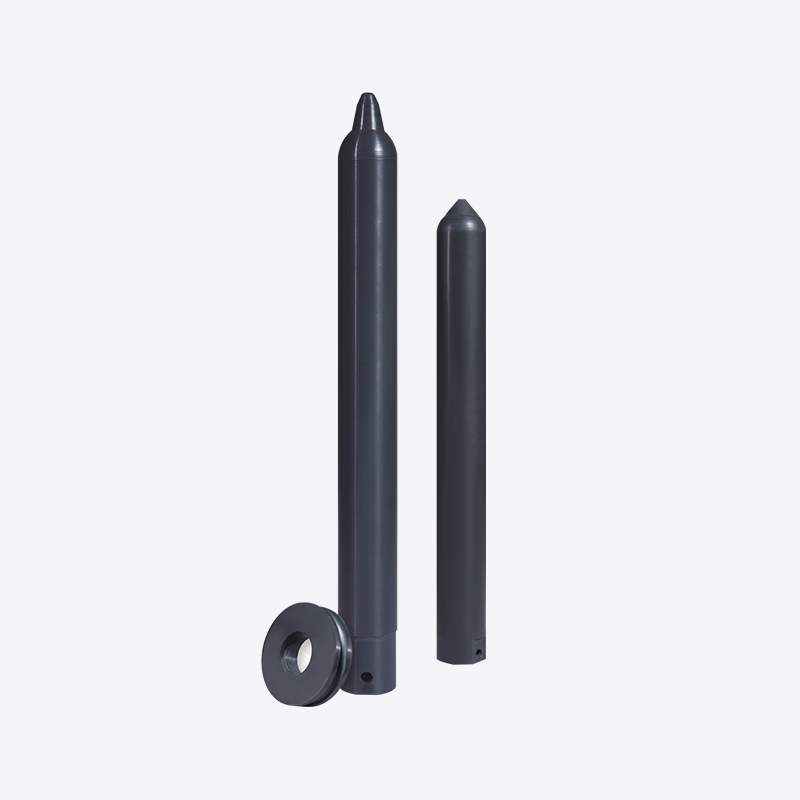
Silicon nitride's resistance to wetting by molten non-ferrous metals — particularly aluminum and its alloys — makes it valuable in foundry applications. Si₃N₄ riser tubes, thermowells, and crucible components for aluminum casting resist dissolution and corrosion by the molten metal far better than steel or conventional refractories, resulting in longer service life and reduced metal contamination. The thermal shock resistance of Si₃N₄ is critical in this application — foundry components experience repeated rapid thermal cycling as they are immersed in and withdrawn from molten metal baths at temperatures up to 900°C.
Machining and Fabrication Considerations
Working with silicon nitride material requires specific machining strategies that differ significantly from metal machining. Because Si₃N₄ is so hard and brittle, conventional machining methods are ineffective and destructive — only diamond-based processes are suitable for finishing dense Si₃N₄ components.
- Diamond grinding: The primary machining method for dense Si₃N₄. Resin-bonded, vitrified, or metal-bonded diamond wheels are used for surface grinding, cylindrical grinding, and profile grinding. Grinding parameters — wheel speed, feed rate, depth of cut, and coolant — must be carefully controlled to avoid surface damage or residual stress introduction that degrades component strength.
- Near-net-shape forming: Because diamond machining is expensive, most Si₃N₄ components are formed as close to final shape as possible before sintering. Pressing, injection molding, slip casting, and extrusion are all used to produce green bodies that require minimal post-sinter finishing. The RBSN process takes this furthest — green silicon preforms can be CNC machined using carbide tools before nitriding, producing complex shapes at much lower cost than post-sinter diamond grinding.
- Laser and ultrasonic machining: For fine features, holes, and slots that cannot be practically ground, laser ablation and ultrasonic machining are used. Both processes avoid the contact forces that can crack Si₃N₄ during conventional machining, though surface finish and achievable tolerances differ from diamond grinding.
- Joining: Silicon nitride cannot be welded. Joining methods include brazing (using active metal brazes with titanium to bond Si₃N₄ to metals), glass-ceramic bonding between Si₃N₄ parts, and mechanical fastening using compression fittings or adhesive bonding for lower-stress joints.
What to Check When Sourcing Silicon Nitride Material
Silicon nitride components and blanks vary significantly in quality between suppliers, and the consequences of under-specification in a demanding application can be severe. Here are the key points to verify when procuring Si₃N₄ material or components:
- Grade and manufacturing route: Confirm explicitly whether the material is RBSN, SSN, GPS Si₃N₄, HPSN, or HIPed — these have significantly different density and mechanical property ranges. Request a material datasheet with measured property values from the supplier's own testing, not just catalog values.
- Density measurement: Archimedes density measurement on production samples is a simple, fast check of material quality. Density below ~3.15 g/cm³ for GPS or HIPed Si₃N₄ indicates residual porosity that will compromise mechanical strength and chemical resistance.
- Sintering aid content and type: The type and amount of sintering aids (yttria, alumina, magnesia, etc.) affect high-temperature strength retention, oxidation resistance, and thermal conductivity. Ask for the nominal composition if high-temperature performance above 1,000°C is required — yttria-alumina systems give better elevated-temperature strength than magnesia-based grades.
- Surface finish and defect inspection: For bearing and cutting tool applications, surface defects — inclusions, pores, grinding cracks — are strength-limiting flaws. Request surface finish specifications (Ra values), and for critical components, fluorescent dye penetrant inspection or X-ray CT scanning to confirm freedom from internal defects.
- Dimensional tolerances: Dense Si₃N₄ components are diamond-ground to tolerance and can achieve ±0.005mm on critical dimensions. Confirm what tolerance grades the supplier's grinding capability supports and whether tolerances are verified on every component or on a sampling basis.
- Certifications: For aerospace (AS9100), medical (ISO 13485), and semiconductor (SEMI standards) applications, confirm that the supplier holds the relevant quality management certifications and can provide full material traceability documentation from raw powder to finished component.
Hot Products
Contact Us for Quotes and Prices!
Just let us know what you want, and we will get in touch with you as soon as possible!

We will continue to develop and produce more advanced ceramic materials for the aluminum processing industry.
Scan the Mobile QR code
Contact
 +86-18501518842 / +86-13587222672
 +86-0572-2926332 / 2926337
 +86-0572-2926335
 [email protected] / [email protected] / [email protected]
 No.11 Building, South Taihu High-tech Intelligent Manufacturing Industrial Park, Wuxing District, Huzhou City, Zhejiang, China
Copyright© 2024 Zhejiang Shangguijuli Special Material Technology Co., Ltd. All Rights Reserved. Ceramic Material Supplier


