

Tel:+86-0572-2926332 / 2926337

E-mail:[email protected]
 REQUEST A QUOTE

 en
en  English
 简体中文
简体中文Silicon Nitride Tubes: What They Are, Why They're Tough, and Where to Use Them
2026.04.08
Content
- 1 What Is a Silicon Nitride Tube and What Makes It Different from Other Ceramics?
- 2 Key Physical and Mechanical Properties of Silicon Nitride Tubing
- 3 Silicon Nitride Grades and Manufacturing Methods: Which One You Actually Need
- 4 Primary Industrial Applications of Silicon Nitride Tubes
- 5 Silicon Nitride Tube vs. Other High-Performance Ceramic Tubes
- 6 How to Specify a Silicon Nitride Tube: Dimensions, Tolerances, and Surface Finish
- 7 Handling, Installation, and Service Life Considerations
- 8 Sourcing Silicon Nitride Tubes: What to Look for in a Supplier
What Is a Silicon Nitride Tube and What Makes It Different from Other Ceramics?
A silicon nitride tube is a hollow cylindrical component manufactured from silicon nitride (Si₃N₄), an advanced structural ceramic formed by the chemical bonding of silicon and nitrogen atoms into a dense, covalently bonded network. Unlike oxide ceramics such as alumina or zirconia — which are the most widely used technical ceramics — silicon nitride is a non-oxide ceramic that derives its exceptional properties from the strength and directionality of its Si–N covalent bonds rather than from ionic bonding. This fundamental difference in atomic structure is what gives Si₃N₄ tubing its remarkable combination of high strength, low density, excellent thermal shock resistance, and outstanding performance in oxidizing, corrosive, and mechanically demanding environments simultaneously.
In practical terms, a silicon nitride ceramic tube is one of very few materials that can be placed into a 1,400°C furnace environment, subjected to rapid cooling, immersed in molten metal, and mechanically loaded — all without fracturing or significantly degrading. Most metals would oxidize or creep under these conditions; most other ceramics would crack from thermal shock. This combination of properties explains why silicon nitride tubes command premium prices and are specified for applications where standard materials have consistently failed.
Silicon nitride tubes are commercially available in a wide range of sizes — from thin-walled laboratory tubes with outer diameters of a few millimeters to large industrial protection tubes exceeding 60 mm in outer diameter and 1,500 mm in length. The specific grade, sintering method, and dimensional tolerances required depend heavily on the end application, and selecting the right combination of these variables is as important as the base material choice itself.
Key Physical and Mechanical Properties of Silicon Nitride Tubing
The performance advantages of silicon nitride tubes over competing materials are rooted in a specific set of physical, mechanical, and thermal properties. Understanding these properties in quantitative terms allows engineers and buyers to make informed comparisons and justify material selection decisions to stakeholders.
| Property | Typical Value (HPSN/SRBSN) | Significance |
| Density | 3.1–3.3 g/cm³ | Lighter than most oxide ceramics and many metals |
| Flexural strength | 600–1,000 MPa | Among the highest of any ceramic at room temperature |
| Fracture toughness (K₁c) | 5–8 MPa·m½ | Unusually high crack resistance for a ceramic |
| Vickers hardness | 1,400–1,700 HV | Excellent wear resistance under abrasive conditions |
| Young's modulus | 280–320 GPa | High stiffness with low elastic deformation under load |
| Thermal conductivity | 15–30 W/m·K | Higher than most ceramics; aids thermal shock resistance |
| Thermal expansion coefficient | 2.5–3.5 × 10⁻⁶ /°C | Low CTE reduces thermal stress during cycling |
| Maximum service temperature | Up to 1,400°C (oxidizing); 1,600°C (inert/vacuum) | Retains strength at temperatures that weaken most metals |
| Thermal shock resistance (ΔT) | 500–800°C rapid temperature change | Far superior to alumina or zirconia under quench conditions |
| Electrical resistivity | >10¹² Ω·cm (room temp) | Excellent electrical insulator at ambient temperatures |
The combination of high fracture toughness and high flexural strength is particularly noteworthy. Most ceramics trade one for the other — a material that is very hard tends to be brittle and prone to catastrophic crack propagation. Silicon nitride achieves both because its microstructure of elongated β-Si₃N₄ grains acts like a fiber-reinforced composite at the microscale, deflecting and bridging cracks rather than allowing them to propagate straight through the material.
Silicon Nitride Grades and Manufacturing Methods: Which One You Actually Need
Not all silicon nitride tubes are manufactured the same way, and the sintering process used to densify the material has a profound effect on its final microstructure, density, strength, and cost. Understanding the main grades helps you specify the right tube for your application rather than over- or under-specifying — both of which have significant cost implications.
Hot-Pressed Silicon Nitride (HPSN)
Hot-pressed silicon nitride is manufactured by simultaneously applying high pressure (typically 20–30 MPa) and high temperature (1,600–1,800°C) to silicon nitride powder with sintering aids such as MgO, Al₂O₃, or Y₂O₃. This process drives full densification and produces a material with the highest mechanical strength and lowest porosity of any Si₃N₄ grade — flexural strengths of 800–1,000 MPa are achievable. However, the hot-pressing process constrains the shapes that can be produced; simple geometries like flat plates, discs, and short cylinders are practical, but complex or thin-walled tubes are difficult and expensive. HPSN is typically used where maximum strength is the primary requirement and geometry constraints are acceptable.
Sintered Reaction-Bonded Silicon Nitride (SRBSN)
SRBSN is produced in a two-stage process: first, silicon metal powder is formed into the desired green shape and nitrided at ~1,300°C to convert it to reaction-bonded silicon nitride (RBSN), which retains its shape with very low shrinkage. The resulting porous RBSN preform is then sintered at higher temperature with sintering aids to close the residual porosity and achieve near-full density. This route allows complex shapes including long, thin-walled tubes to be produced with excellent dimensional accuracy and relatively modest tooling costs. SRBSN tubes offer flexural strength of 600–800 MPa and excellent thermal shock resistance, making them the most common choice for thermocouple protection tubes, immersion heater sheaths, and industrial furnace applications.
Gas-Pressure Sintered Silicon Nitride (GPSSN)
Gas-pressure sintering uses an elevated nitrogen atmosphere (typically 1–10 MPa) during high-temperature sintering to suppress decomposition of silicon nitride at temperatures above 1,700°C, enabling higher densification temperatures without the need for the pressing equipment used in hot pressing. The result is a fully dense material with strength and toughness approaching HPSN but with greater shape-making freedom. GPSSN is particularly valued for applications requiring strength retention at elevated temperatures — above 1,200°C — where grain boundary glass phases in other grades begin to soften. It is commonly specified for demanding aerospace, turbine, and high-performance industrial applications.
Reaction-Bonded Silicon Nitride (RBSN)
Reaction-bonded silicon nitride without the subsequent sintering step produces a porous material (10–25% residual porosity) with lower strength than fully dense grades — typically 150–300 MPa in flexural strength. The major advantage of RBSN is dimensional precision: because nitriding silicon metal causes virtually zero net change in volume, RBSN components can be machined to near-final dimensions in the silicon metal state and then nitrided with almost no dimensional change, eliminating costly post-sinter diamond grinding. RBSN tubes are used in lower-stress applications where dimensional precision or complex internal geometry outweighs the need for maximum strength.
Primary Industrial Applications of Silicon Nitride Tubes
Silicon nitride ceramic tubes are deployed across a surprisingly wide range of industries, each exploiting a different subset of the material's capabilities. In each case, the application involves conditions that routinely destroy or rapidly degrade alternative materials — which is precisely why the higher cost of Si₃N₄ tubing is justified.
Thermocouple Protection Tubes in High-Temperature Furnaces
One of the most established applications for silicon nitride protection tubes is as thermocouple sheaths in industrial furnaces operating above 1,200°C. A thermocouple protection tube serves as a physical and chemical barrier between the thermocouple sensor wires and the harsh furnace atmosphere — protecting them from oxidizing gases, corrosive combustion products, and mechanical contact while conducting the temperature signal with minimal error. Silicon nitride tubes excel in this role because they resist oxidation up to 1,400°C in air, have high thermal conductivity relative to other ceramics (which reduces thermal lag between the tube wall and the sensing junction inside), and can survive the repeated thermal cycling that furnace start-up and shutdown impose without cracking.
In aluminium melting and holding furnaces specifically, silicon nitride thermocouple protection tubes outperform alumina alternatives dramatically. Molten aluminium wets and penetrates alumina tubes rapidly, leading to fracture and thermocouple failure within weeks. Silicon nitride is not wetted by molten aluminium or most other non-ferrous metals, allowing service lives measured in months or years under the same conditions.
Molten Metal Immersion Heater Sheaths and Riser Tubes
Silicon nitride immersion tubes are widely used in aluminium, zinc, and magnesium die casting and foundry operations as sheaths for electric immersion heaters and as riser tubes in low-pressure die casting machines. In these applications, the tube is in direct, continuous contact with molten metal at temperatures of 700–900°C for extended periods. The non-wetting behavior of Si₃N₄ in molten aluminium is the critical property here — it prevents metal infiltration into the tube wall, eliminating the degradation mechanism that destroys competing materials. The combination of high thermal shock resistance (essential for the initial plunge into molten metal), chemical inertness to the melt, and mechanical strength under the hydrostatic pressure of the molten metal column makes silicon nitride the material of choice for this demanding application.
Semiconductor and Solar Industry Process Tubes
In semiconductor wafer fabrication and solar cell manufacturing, silicon nitride tubes are used as process tubes and boat carriers inside diffusion furnaces, oxidation furnaces, and chemical vapor deposition (CVD) reactors. These environments involve ultra-high-purity requirements, controlled atmospheres of reactive gases (HCl, O₂, N₂, H₂), and precisely controlled temperatures up to 1,200°C. Silicon nitride offers extremely low levels of metallic contamination compared to quartz tubes at temperatures where quartz begins to devitrify and lose its structural integrity. Si₃N₄ process tubes also offer superior resistance to the thermal shock of rapid gas purging cycles that are common in modern semiconductor processes.
Aerospace and Gas Turbine Components
Silicon nitride's combination of low density, high-temperature strength retention, and excellent creep resistance makes it an attractive structural ceramic for aerospace applications. Si₃N₄ tubes and tubular components have been investigated and implemented in gas turbine combustion liner inserts, heat exchanger tubes for high-efficiency recuperators, and nozzle components where weight reduction at elevated operating temperatures provides performance and fuel efficiency benefits that no metallic alloy can match. The challenge in aerospace adoption is not material performance but reliability demonstration and certification — ceramic components require extensive probabilistic design methodologies to account for their inherent flaw sensitivity.
Chemical Processing and Corrosive Fluid Handling
Silicon nitride ceramic tubes are used as reaction tubes, heat exchanger tubes, and flow pipes in chemical processing environments involving strong acids (except hydrofluoric acid), alkalis at moderate temperatures, and aggressive organic compounds that would corrode metallic alternatives. Si₃N₄ is resistant to most mineral acids at room temperature and maintains good chemical resistance at elevated temperatures where metallic options are degraded by corrosion at an economically unacceptable rate. In the production of specialty chemicals, pharmaceuticals, and electronic chemicals where metallic contamination of the process stream is unacceptable, silicon nitride tubes provide both chemical inertness and the mechanical robustness to function as structural process components.
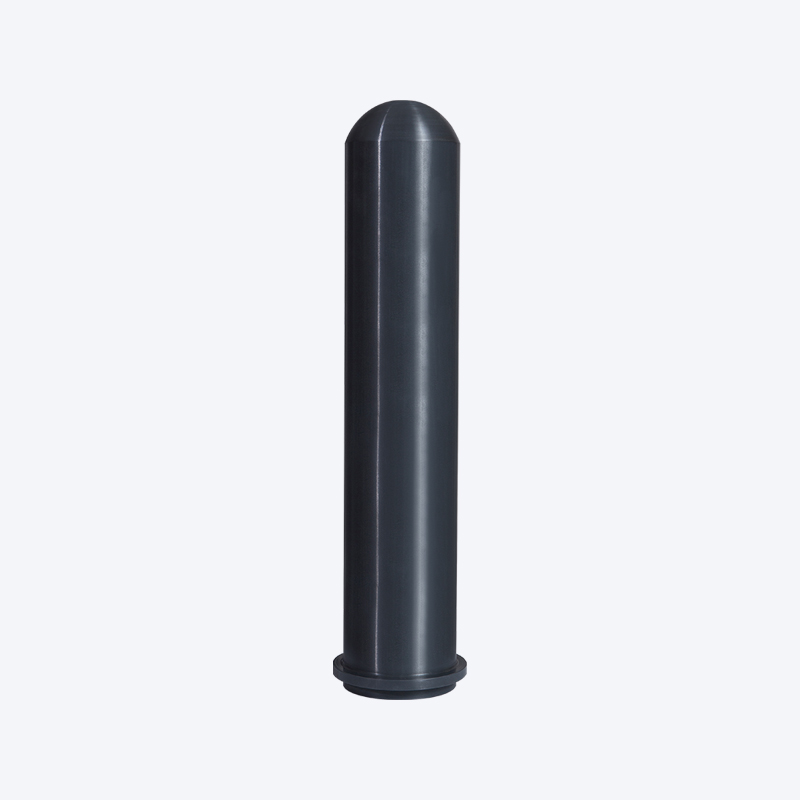
Silicon Nitride Tube vs. Other High-Performance Ceramic Tubes
Engineers selecting a ceramic tube for a demanding application are typically choosing between silicon nitride and one or more competing advanced ceramic materials. The right choice depends on which specific combination of properties your application demands. The following comparison covers the most commonly evaluated alternatives.
| Material | Max Service Temp. | Thermal Shock Resistance | Flexural Strength | Molten Al Resistance | Relative Cost |
| Silicon nitride (Si₃N₄) | 1,400°C (air) | Excellent | 600–1,000 MPa | Excellent | High |
| Alumina (Al₂O₃) | 1,700°C (air) | Poor to moderate | 200–400 MPa | Poor | Low |
| Silicon carbide (SiC) | 1,600°C (inert) | Very good | 350–500 MPa | Good | Medium–High |
| Zirconia (ZrO₂) | 2,200°C (air) | Moderate | 500–700 MPa | Moderate | High |
| Mullite (3Al₂O₃·2SiO₂) | 1,650°C (air) | Good | 150–250 MPa | Poor | Low–Medium |
| Boron nitride (BN) | 900°C (air) | Excellent | 50–100 MPa | Excellent | Very High |
Silicon carbide tubes are the closest competitor to silicon nitride in high-temperature structural applications. SiC offers higher thermal conductivity and slightly better performance above 1,400°C in inert atmospheres, but its lower fracture toughness makes it more susceptible to catastrophic failure from mechanical impact or severe thermal shock events. For applications where both thermal shock and mechanical loading are present — such as thermocouple protection in foundry environments — Si₃N₄ is generally the safer choice despite SiC's higher-temperature ceiling.
How to Specify a Silicon Nitride Tube: Dimensions, Tolerances, and Surface Finish
Ordering a silicon nitride ceramic tube requires more precise specification than ordering a standard metal or plastic tube. Because Si₃N₄ is a brittle material machined by diamond grinding after sintering, dimensional tolerances and surface finish have a direct impact on both the cost and the reliability of the component in service. Knowing what to specify — and what level of precision you actually need — helps control costs without compromising performance.
- Outer diameter (OD) and inner diameter (ID): Standard commercial silicon nitride tubes are available in outer diameters ranging from approximately 6 mm to 60 mm with wall thicknesses from 2 mm to 10 mm. Custom dimensions are manufactured on request. Specify OD and ID separately rather than OD and wall thickness to avoid ambiguity, and state whether the tolerance applies to the as-sintered dimension or to a ground dimension. Ground tolerances of ±0.05–0.1 mm are typical for precision applications; as-sintered tolerances are considerably wider (±0.5–1.0 mm depending on grade and size).
- Length: Sintered silicon nitride tubes are available in standard lengths up to approximately 1,500 mm for SRBSN grades. Specify the nominal length and the acceptable tolerance — typically ±1–2 mm for cut-to-length tubes, or tighter if the tube must register against a stop in an assembly.
- Straightness: Long silicon nitride tubes (above 300–400 mm) can exhibit slight bow from the sintering process. Specify a maximum straightness deviation — typically 0.5 mm per 300 mm of length for standard grade, or 0.2 mm per 300 mm for precision applications. Straightness is particularly important for thermocouple protection tubes where the sensor wire must pass through the full length of the bore without binding.
- Surface finish (Ra): As-sintered surfaces have a roughness of approximately Ra 1.5–3.0 μm. Ground surfaces can be specified to Ra 0.4–0.8 μm for general engineering applications or Ra 0.1–0.2 μm for precision or sealing surfaces. Finer surface finishes increase cost significantly due to additional grinding passes, and are only necessary where the tube surface forms a seal, a sliding contact, or is inspected optically for defects.
- End geometry: Specify whether tube ends should be open, closed (domed or flat-bottomed), or chamfered. Closed-end protection tubes — the most common configuration for thermocouple sheaths — require that the closed end be specified with a minimum wall thickness and a maximum internal corner radius to avoid stress concentration. Chamfering or rounding of open ends is strongly recommended to prevent chipping during handling and installation.
- Density and porosity: For critical applications, specify minimum density (typically ≥3.1 g/cm³ for SRBSN, ≥3.2 g/cm³ for GPSSN) and request a certificate of conformance with measured density values. Porosity above acceptable levels creates preferential pathways for oxidation, corrosion, and molten metal infiltration that will shorten service life.
Handling, Installation, and Service Life Considerations
Even the best silicon nitride tube will underperform or fail prematurely if it is handled, installed, or operated incorrectly. Ceramics are unforgiving of practices that metal components tolerate routinely — understanding their specific handling requirements is essential for getting full value from the investment.
Handling and Storage
Silicon nitride tubes should be handled with clean cotton or nitrile gloves to prevent contamination of precision surfaces. Never use metal tools to force a tube into or out of a fitting — mechanical point loading against a ceramic surface can initiate surface cracks that propagate under thermal or mechanical stress in service. Store tubes vertically in padded racks or horizontally on soft supports to prevent bowing or contact damage. Inspect each tube under good lighting for chips, cracks, or surface defects before installation — any visible crack or edge chip is grounds for rejection, as cracks in ceramics grow progressively under cyclic loading.
Installation Best Practices
When installing a silicon nitride tube into a metal housing, bracket, or refractory support, always provide a compliant intermediate layer — typically a ceramic fiber sleeve, high-temperature gasket material, or flexible graphite tape — between the ceramic and any rigid metal contact surface. Direct metal-to-ceramic rigid clamping creates stress concentrations that fracture ceramics even at modest clamping forces. Allow a thermal expansion differential gap between the Si₃N₄ tube and any surrounding metal structure; silicon nitride expands at approximately 3 × 10⁻⁶ /°C while steel expands at 12 × 10⁻⁶ /°C — four times faster — so a tube installed with a snug fit at room temperature will be in compression from the steel as temperature rises.
Thermal Cycling and Ramp Rates
Despite silicon nitride's outstanding thermal shock resistance relative to other ceramics, extremely rapid temperature changes still generate internal thermal stresses. For applications involving controlled furnace heating and cooling — such as laboratory tube furnaces or semiconductor diffusion tubes — limit ramp rates to 5–10°C per minute for tubes with wall thicknesses above 5 mm. For furnace insertion and extraction operations in foundry environments where rapid immersion in molten metal is unavoidable, pre-warm the tube to at least 200–300°C before immersion to reduce the initial thermal gradient. This single practice can extend tube service life by 50% or more in molten metal applications.
Monitoring and End-of-Life Indicators
Silicon nitride protection tubes in continuous high-temperature service should be inspected at regular intervals — typically during scheduled production downtime. Indicators that a tube is approaching end of life include visible surface oxidation or discoloration beyond the expected range, dimensional changes at the hot end (indicating localized material loss or creep), loss of gas-tightness (detectable by pressure testing closed-end tubes), audible changes in acoustic response when tapped (a dull rather than clear ring suggests internal cracking), and any visible crack or spall on the external surface. Replace tubes proactively based on inspection findings rather than waiting for in-service failure, which risks product contamination, thermocouple loss, and equipment damage.
Sourcing Silicon Nitride Tubes: What to Look for in a Supplier
The global market for silicon nitride ceramic tubes includes a wide range of suppliers — from major advanced ceramics manufacturers with full in-house manufacturing capability to distributors who source from third-party producers. The quality, consistency, and reliability of Si₃N₄ tubes vary significantly between suppliers, and the consequences of receiving substandard material in a critical application can be severe. The following criteria help identify a supplier capable of delivering consistent, application-appropriate product.
- In-house manufacturing vs. reselling: Suppliers who manufacture their own Si₃N₄ tubes have direct control over powder selection, sintering conditions, and quality testing. This traceability is important when you need batch-to-batch consistency and have the right to audit manufacturing quality. Distributors can offer competitive pricing but typically have less transparency into the manufacturing process and may switch sources between orders.
- Quality certification and test documentation: Reputable suppliers provide a certificate of conformance with each shipment stating the measured density, the sintering process used, and dimensional inspection results. For critical applications, request third-party material property testing data — flexural strength, thermal conductivity, and chemical composition — from an accredited testing laboratory rather than relying solely on supplier-generated data.
- Custom manufacturing capability: If your application requires non-standard dimensions, closed ends, machined features, or specific surface finishes, confirm that the supplier has the in-house diamond grinding and machining capability to produce these features. Many distributors can only supply standard catalogued sizes.
- Application engineering support: The best silicon nitride tube suppliers offer technical support to help you select the right grade and specify dimensions correctly for your application. This is particularly valuable if you are transitioning from a different ceramic material or metal to Si₃N₄ for the first time and need guidance on installation design, thermal cycling procedures, and expected service life.
- Minimum order quantities and lead times: Silicon nitride tubes are not commodity items. Standard sizes may be available from stock for rapid delivery, but custom dimensions typically require 4–12 weeks lead time for manufacturing. Clarify minimum order quantities before budgeting — some manufacturers require minimum orders of 10–20 pieces for non-standard items, which affects inventory and cash flow planning for lower-volume users.
Hot Products
Contact Us for Quotes and Prices!
Just let us know what you want, and we will get in touch with you as soon as possible!

We will continue to develop and produce more advanced ceramic materials for the aluminum processing industry.
Scan the Mobile QR code
Contact
 +86-18501518842 / +86-13587222672
 +86-0572-2926332 / 2926337
 +86-0572-2926335
 [email protected] / [email protected] / [email protected]
 No.11 Building, South Taihu High-tech Intelligent Manufacturing Industrial Park, Wuxing District, Huzhou City, Zhejiang, China
Copyright© 2024 Zhejiang Shangguijuli Special Material Technology Co., Ltd. All Rights Reserved. Ceramic Material Supplier


