

Tel:+86-0572-2926332 / 2926337

E-mail:[email protected]
 REQUEST A QUOTE

 en
en  English
 简体中文
简体中文Why Silicon Nitride is Replacing Steel in High-Performance Engineering
2026.01.04
Content
Core Properties of Silicon Nitride (Si3N4)
Silicon Nitride is a high-performance technical ceramic characterized by its unique combination of thermal, mechanical, and electrical properties. Unlike many other ceramics that are brittle under thermal stress, Silicon Nitride boasts a very low coefficient of thermal expansion and high fracture toughness. This makes it exceptionally resistant to thermal shock, allowing it to withstand rapid temperature fluctuations without cracking. Chemically, it is composed of silicon and nitrogen arranged in a covalent bond structure, which results in a material that is nearly as hard as diamond while remaining significantly lighter than high-strength steel alloys.
Physical and Thermal Characteristics
| Property | Typical Value |
| Density | 3.2 - 3.5 g/cm³ |
| Hardness (Vickers) | 1400 - 1600 HV |
| Thermal Conductivity | 20 - 30 W/m·K |
| Max Operating Temp | Up to 1200°C |
Manufacturing Processes and Material Grades
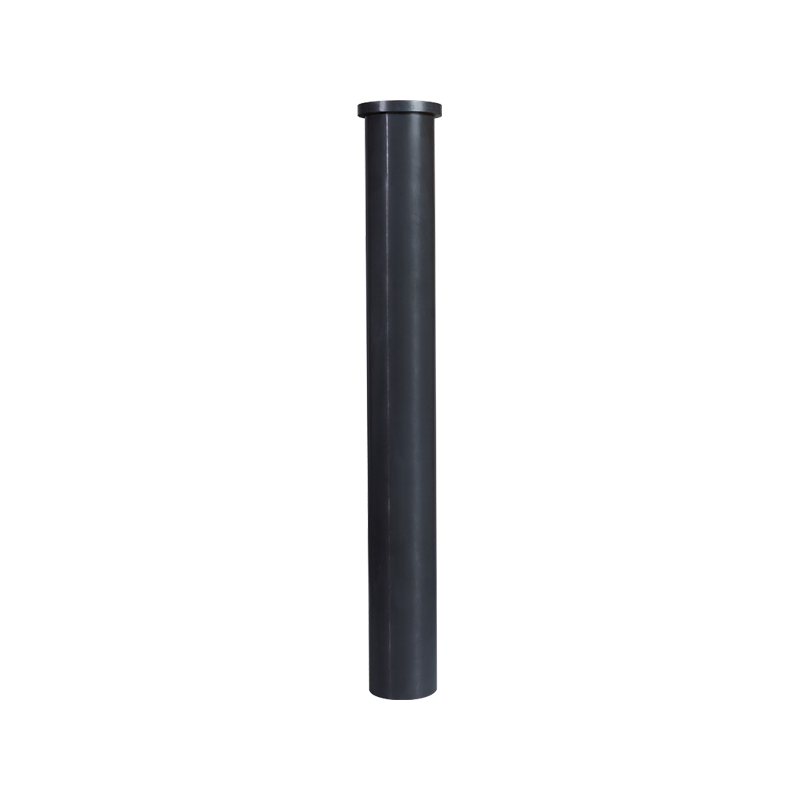
The performance of Silicon Nitride is heavily dependent on the method used to synthesize and densify the powder. Because the material does not melt, it must be formed through sintering processes. Reaction Bonded Silicon Nitride (RBSN) is created by nitriding a silicon powder compact, resulting in excellent dimensional stability but higher porosity. In contrast, Gas Pressured Sintered Silicon Nitride (GPSSN) and Hot Pressed Silicon Nitride (HPSN) use high pressure and temperature to achieve near-theoretical density, offering the highest mechanical strength for demanding aerospace and automotive applications.
- Sintered Silicon Nitride (SSN): Uses additives to facilitate densification at high temperatures.
- Hot Isostatic Pressed (HIP-SN): Eliminates internal micro-voids for maximum fatigue resistance.
- Reaction Bonded (RBSN): Best for complex shapes where tight tolerances are required without machining.
Industrial Applications and Engineering Advantages
In the automotive and aerospace sectors, Silicon Nitride is the gold standard for high-speed bearing components. Ceramic ball bearings made from Si3N4 are 40% lighter than steel, produce less friction, and can operate without lubrication for short periods, which is critical for emergency scenarios in jet engines. Furthermore, its non-magnetic and electrically insulating properties make it ideal for use in semiconductor manufacturing equipment and medical implants, where interference with magnetic resonance imaging (MRI) or electrical circuits must be avoided.
Key Benefits in Extreme Environments
- Corrosion Resistance: Impervious to most acids and alkaline solutions at room temperature.
- Wear Resistance: Superior longevity in abrasive environments compared to tungsten carbide.
- High Stiffness: Provides excellent structural rigidity with a Young's Modulus of approximately 310 GPa.
Design Considerations for Silicon Nitride Components
When designing with Silicon Nitride, engineers must account for the material's lack of ductility. While it is incredibly strong in compression, it is sensitive to point loading and tension. To maximize the lifespan of ceramic parts, it is essential to avoid sharp internal corners and utilize generous radii to distribute stress. Additionally, because Silicon Nitride is difficult to machine after sintering, components should be designed as close to "net-shape" as possible, or ground using diamond-tipped tooling to achieve final tolerances. Proper integration often involves using shrink-fits or specialized adhesives to bond the ceramic to metal housings.
Hot Products
Contact Us for Quotes and Prices!
Just let us know what you want, and we will get in touch with you as soon as possible!

We will continue to develop and produce more advanced ceramic materials for the aluminum processing industry.
Scan the Mobile QR code
Contact
 +86-18501518842 / +86-13587222672
 +86-0572-2926332 / 2926337
 +86-0572-2926335
 [email protected] / [email protected] / [email protected]
 No.11 Building, South Taihu High-tech Intelligent Manufacturing Industrial Park, Wuxing District, Huzhou City, Zhejiang, China
Copyright© 2024 Zhejiang Shangguijuli Special Material Technology Co., Ltd. All Rights Reserved. Ceramic Material Supplier


