

Tel:+86-0572-2926332 / 2926337

E-mail:[email protected]
 REQUEST A QUOTE

 en
en  English
 简体中文
简体中文Silicon Nitride Degassing Rotor: Why It Outperforms Other Materials in Aluminum Melt Treatment
2026.03.25
Content
- 1 What a Silicon Nitride Degassing Rotor Actually Does in Aluminum Processing
- 2 Why Silicon Nitride Is the Material of Choice for Degassing Rotors
- 3 Silicon Nitride vs. Other Degassing Rotor Materials: A Direct Comparison
- 4 Key Design Features of a Silicon Nitride Degassing Rotor
- 5 Selecting the Right Silicon Nitride Degassing Rotor for Your System
- 6 Operating Practices That Maximize Silicon Nitride Rotor Service Life
- 7 Inspecting and Retiring a Silicon Nitride Degassing Rotor
What a Silicon Nitride Degassing Rotor Actually Does in Aluminum Processing
A silicon nitride degassing rotor is the rotating component at the heart of a rotary impeller degassing system used to purify molten aluminum before casting. During aluminum melting and holding, dissolved hydrogen gas is absorbed into the melt from moisture in the atmosphere, the charge materials, and the furnace environment. Hydrogen is the primary cause of porosity in aluminum castings — as the metal solidifies, hydrogen that was dissolved in the liquid state comes out of solution and forms gas pores trapped within the part, reducing mechanical strength, pressure tightness, and surface quality. The degassing rotor's job is to eliminate this hydrogen before the metal is cast.
The rotor achieves this by spinning at controlled speeds — typically between 200 and 600 RPM depending on the system and alloy — while an inert gas, usually argon or nitrogen, is fed through a hollow shaft and into the rotor body. The rotor's geometry breaks this gas stream into millions of fine bubbles that disperse through the melt in a controlled flow pattern. Hydrogen dissolved in the aluminum diffuses into these bubbles according to partial pressure equilibrium — the bubbles contain no hydrogen when they enter the melt, so hydrogen migrates into them naturally as they rise through the metal. By the time the bubbles reach the surface, they carry the extracted hydrogen out of the melt with them. The silicon nitride material this rotor is made from is what allows it to function reliably in an environment that would rapidly destroy most other materials.
Why Silicon Nitride Is the Material of Choice for Degassing Rotors
Silicon nitride (Si3N4) is an advanced engineering ceramic with a combination of properties that happens to match the demands of the molten aluminum degassing environment almost perfectly. This isn't coincidental — Si3N4 degassing rotors emerged as the industry standard precisely because the material's characteristics address every major failure mode that affects competing rotor materials.
Non-Wetting Behavior Against Molten Aluminum
The single most important property of silicon nitride in this application is that molten aluminum does not wet it. Wetting refers to the tendency of a liquid metal to adhere to and infiltrate a solid surface. Graphite, which was historically the dominant degassing rotor material, wets readily with aluminum — the liquid metal bonds to the graphite surface, and over time aluminum infiltrates microscopic surface pores and reacts with the carbon to form aluminum carbide (Al4C3). Aluminum carbide is brittle, it hydrolyzes in the presence of moisture to produce acetylene gas, and its particles contaminate the melt. Silicon nitride has no such reaction with aluminum. The melt does not bond to the surface, does not infiltrate the material, and no chemical reaction between Si3N4 and aluminum produces contamination products under typical processing temperatures between 680°C and 780°C.
Thermal Shock Resistance
Degassing rotors are inserted into melt that may be 730°C or hotter, and they are removed and left to cool between production cycles. This repeated thermal cycling would crack most ceramics within a short number of cycles due to thermal shock — the mechanical stress generated when a material's surface and interior heat or cool at different rates. Silicon nitride handles this cycle well because of its low thermal expansion coefficient (approximately 3.2 × 10⁻⁶/°C) combined with reasonably high thermal conductivity for a ceramic. The combination means temperature gradients through the rotor body during immersion and extraction remain manageable, and the resulting thermal stresses stay below the material's fracture threshold under normal operating practice. Rotors should still be preheated before first immersion in a new production run — but the material's thermal shock resistance provides a meaningful safety margin when preheating is done properly.
Mechanical Strength at Operating Temperature
Silicon nitride retains most of its room-temperature flexural strength at the temperatures encountered in aluminum degassing. Typical Si3N4 grades used for degassing components exhibit flexural strength in the range of 700 to 900 MPa at room temperature, dropping to roughly 600 to 750 MPa at 800°C — still substantially stronger than most competing ceramic materials at equivalent temperatures. This retained hot strength matters because the rotor experiences both the centrifugal stress of rotation and the mechanical drag of moving through dense liquid aluminum. A rotor material that softens or weakens significantly at operating temperature would be at risk of deformation or fracture under these combined loads, particularly at the shaft connection point where bending stresses concentrate.
Oxidation and Corrosion Resistance
The portion of the rotor shaft above the melt surface is exposed to a hot, oxidizing atmosphere that can reach 400°C to 600°C near the melt surface. Silicon nitride forms a thin, adherent silica (SiO2) layer on its surface when exposed to oxygen at elevated temperature. Unlike the oxidation of metals, which can result in spalling, flaking oxide layers, this silica layer is self-limiting and protective — it slows further oxidation rather than propagating it. This means the silicon nitride shaft above the melt maintains its integrity over hundreds of operating hours in an environment that would cause rapid degradation in graphite (which burns in air at elevated temperature) or in boron nitride (which oxidizes above approximately 850°C in wet conditions).
Silicon Nitride vs. Other Degassing Rotor Materials: A Direct Comparison
Understanding why Si3N4 dominates the market for aluminum degassing rotors becomes clearer when the competing materials are examined side by side. Each alternative has specific limitations that silicon nitride addresses:
| Material | Wetting by Al Melt | Thermal Shock Resistance | Oxidation Resistance | Melt Contamination Risk | Typical Service Life |
| Silicon Nitride (Si3N4) | None | Excellent | Excellent | Very Low | 300–700+ hours |
| Graphite | Moderate | Good | Poor (burns in air) | High (Al4C3 formation) | 50–150 hours |
| Alumina (Al2O3) | Low | Poor | Excellent | Low | 50–100 hours |
| Silicon Carbide (SiC) | Low–Moderate | Good | Good | Moderate (SiC reacts with some alloys) | 100–250 hours |
| Boron Nitride (BN) | None | Excellent | Fair (degrades in moist air at high temp) | Low | 100–200 hours |
Graphite's low cost made it the early default for degassing rotors, but its contamination risk is a fundamental limitation for any application where melt cleanliness is critical — automotive structural castings, aerospace components, or any part that requires pressure tightness. The aluminum carbide inclusions it generates are hard, brittle particles that reduce fatigue life in the finished casting and can cause leak paths in pressure-tight parts. Silicon nitride eliminates this contamination vector entirely, which is the primary reason foundries running quality-sensitive alloys switched to Si3N4 degassing rotors despite their higher initial cost.
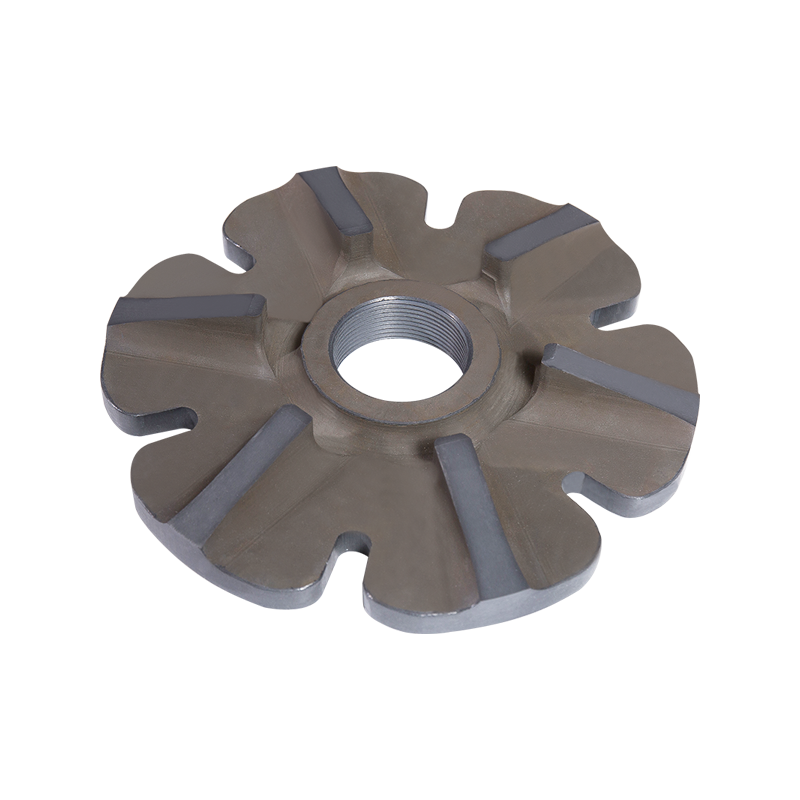
Key Design Features of a Silicon Nitride Degassing Rotor
Not all Si3N4 degassing rotors are designed the same way, and the geometric and structural details of a rotor significantly affect its degassing performance, bubble dispersion pattern, and service life. Understanding what distinguishes a well-engineered rotor from a basic one helps in evaluating suppliers and specifying components.
Rotor Head Geometry and Vane Design
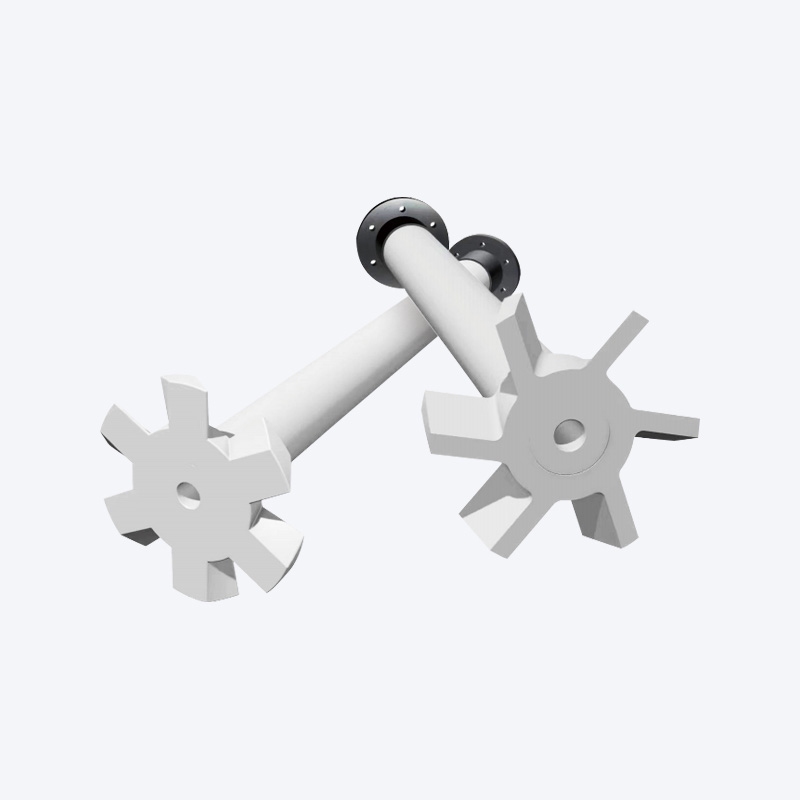
The head of a silicon nitride degassing rotor — the submerged portion that actually contacts the melt — contains the vane or impeller geometry that determines bubble size and dispersion. Rotor heads are typically designed with radially oriented channels or vanes that feed inert gas from the central bore outward to the periphery of the rotor. The exit geometry at the vane tips controls the shear applied to the gas as it leaves the rotor — higher shear produces finer bubbles, which is generally desirable because smaller bubbles have a higher surface-area-to-volume ratio and more effectively extract dissolved hydrogen for a given volume of purging gas. Rotor vane designs with sharp exit edges and finer channel geometry tend to produce smaller average bubble diameters than simpler, broader channel designs.
Shaft Length, Diameter, and Bore Geometry
The shaft of a silicon nitride rotor must be long enough to position the rotor head at the correct immersion depth — typically at the midpoint of the melt depth or slightly below — while keeping the shaft-to-drive-adapter connection above the melt surface and out of the immediate heat radiation zone. Shaft diameter is sized to balance two competing requirements: adequate cross-sectional area for structural rigidity under combined bending and torsional loads, and a gas passage bore large enough to deliver the required gas flow rate at acceptable back pressure. Most Si3N4 rotor shafts for industrial degassing systems run between 40mm and 80mm in outer diameter, with internal bore diameters between 8mm and 20mm depending on the gas flow requirements of the system.
Connection to the Drive Adapter
The interface between the ceramic silicon nitride shaft and the metallic drive adapter that connects it to the motor is a critical design detail that causes a disproportionate number of premature failures. Ceramic and metal have very different thermal expansion coefficients — Si3N4 expands at roughly 3.2 × 10⁻⁶/°C while steel expands at approximately 12 × 10⁻⁶/°C. A rigid bolted connection between these materials will generate enormous interface stresses during thermal cycling as the metal adapter expands far faster than the ceramic shaft. Well-designed connection systems use compliant intermediate components — flexible graphite washers, spring-loaded clamps, or tapered mechanical couplings — to accommodate this differential expansion without transmitting destructive stress into the ceramic. Rotors that fail at the shaft top are frequently the result of inadequate accommodation of this thermal expansion mismatch.
Selecting the Right Silicon Nitride Degassing Rotor for Your System
Several operating parameters need to be matched carefully when specifying a Si3N4 degassing rotor for a particular installation. Using an undersized or incorrectly proportioned rotor is a common source of poor degassing results that gets misattributed to other process variables.
- Melt volume and treatment vessel dimensions: The rotor diameter and immersion depth should be specified relative to the ladle or treatment vessel size. A rotor head that is too small for the vessel will not generate sufficient melt circulation to expose the full melt volume to the purge gas bubble stream within a practical treatment time. General guidance suggests rotor head diameter should be approximately 1/8 to 1/6 of the vessel inner diameter for efficient whole-volume treatment.
- Target rotor speed and gas flow rate: The degassing system's drive unit speed range must be matched to the rotor's design operating speed. Each rotor design has an optimal speed range where it produces the finest, most uniformly distributed bubble cloud. Running significantly below this range produces coarse, ineffective bubbles; running above it can cause excessive melt surface turbulence that draws oxide films into the melt — counterproductive to melt cleanliness. Confirm the rotor's designed speed range against your drive unit's specifications before procurement.
- Alloy chemistry and operating temperature: Most standard silicon nitride degassing rotors perform across the full range of common wrought and cast aluminum alloys. However, alloys with high magnesium content (above approximately 3–4%) can react more aggressively with ceramic surfaces under some conditions. If you are processing high-Mg alloys such as 5083, 5182, or 535, confirm with the rotor supplier that their Si3N4 grade and surface finish have been validated for this application.
- Shaft length relative to vessel geometry: The shaft must be long enough that the rotor head reaches the required immersion depth with the drive unit positioned safely above the melt surface and the radiation heat zone. Measure the vessel geometry — including the depth from the drive unit mounting point to the normal operating melt level — before specifying shaft length. Custom shaft lengths are commonly available from Si3N4 rotor manufacturers and add minimal cost compared to the cost of a poorly performing installation.
- Si3N4 grade — sintered vs. reaction-bonded: Silicon nitride degassing rotors are manufactured from either sintered silicon nitride (SSN/HPSN/GPS) or reaction-bonded silicon nitride (RBSN). Sintered grades have higher density, higher strength, and better thermal shock resistance but are more expensive to manufacture due to high-temperature sintering with sintering aids. Reaction-bonded grades are lower cost and somewhat easier to machine into complex geometries, but have lower strength and higher porosity that can affect long-term performance in aggressive melt environments. For high-production or quality-critical applications, sintered Si3N4 is strongly preferred.
Operating Practices That Maximize Silicon Nitride Rotor Service Life
A silicon nitride degassing rotor that is properly handled and operated routinely achieves service lives of 300 to 700 hours or more. The same rotor subjected to avoidable operational errors may fail within 50 hours. The gap between these outcomes is almost entirely determined by handling and startup practices, not material quality.
Preheating Before Melt Immersion
This is the single most impactful practice for extending the service life of any ceramic degassing rotor. When a room-temperature silicon nitride rotor is immersed directly into 730°C molten aluminum, the surface of the ceramic heats instantly while the core remains cool. The resulting thermal gradient generates tensile stress on the cooler core that can initiate or propagate cracks — particularly at stress concentrations like the vane bases, gas exit holes, or the shaft-to-head transition. Proper preheating involves positioning the rotor in or above the furnace environment for a minimum of 15 to 30 minutes before immersion, bringing the entire assembly to a temperature above 300°C before it contacts the melt. Foundries that consistently preheat their rotors report dramatically better average service lives than those that skip this step, even when using identical rotor components.
Handling and Storage
Silicon nitride is substantially tougher than most ceramics — it won't shatter from a minor knock the way alumina will — but it is still a ceramic, and impact loading at stress concentrations can initiate cracks that aren't immediately visible but propagate to failure under thermal cycling. Rotors should be stored vertically or in a padded cradle, never lying horizontally unsupported across a hard surface where the shaft weight creates bending stress at the head junction. Transport between operations should avoid contact of the vane tips or shaft bore with metal surfaces. Inspect the rotor visually before each installation for any chips, surface cracks, or damage to the gas exit holes — a compromised rotor should be withdrawn from service before it fails in the melt.
Gas Flow Startup Sequence
Inert gas flow should be established through the rotor before immersion into the melt, not after. Starting gas flow after the rotor is already submerged requires the gas to overcome the hydrostatic pressure of the melt column above the gas exit holes — this momentary back pressure can force aluminum into the rotor's bore before gas flow is established, and aluminum that solidifies inside the bore can cause catastrophic fracture when the rotor is later rotated or extracted. The correct sequence is: begin gas flow at a low rate, confirm flow at the rotor head, immerse the rotating rotor into the melt, then ramp to operating speed and flow rate. Following this sequence consistently adds no time to the process and substantially reduces the risk of bore contamination failures.
Inspecting and Retiring a Silicon Nitride Degassing Rotor
Knowing when to retire a silicon nitride rotor before it fails in service is a practical skill that prevents costly melt contamination events and unplanned production stoppages. Failure of a rotor in the melt — where ceramic fragments drop into the aluminum — can result in inclusion-laden material that may not be detected until downstream quality control or, worse, in service on the end customer's parts.
- Dimensional wear at vane tips: The vane tips of a silicon nitride rotor wear gradually through erosion by the flowing melt and by abrasion from alumina oxide inclusions suspended in the metal. Measure vane tip diameter periodically and retire the rotor when tip diameter has decreased by more than 5 to 8% from new dimensions — at this point the gas dispersion geometry has been compromised enough to reduce degassing efficiency measurably.
- Surface pitting or erosion on vane faces: Localized pitting on the vane surfaces, particularly near the gas exit points, indicates accelerated erosion that can progress to through-holes or structural thinning. Any visible pitting deeper than approximately 2mm should trigger retirement evaluation regardless of overall dimensional status.
- Cracks visible at the shaft or head: Any crack visible to the naked eye on a silicon nitride degassing rotor is grounds for immediate retirement. What appears as a hairline surface crack may already penetrate significantly into the material, and thermal cycling will propagate it rapidly. There is no safe repair for a cracked ceramic rotor — it must be replaced.
- Increased back pressure at constant gas flow: If the inert gas supply pressure must be increased to maintain the same flow rate through the rotor, it usually indicates that aluminum has partially blocked one or more gas exit channels. This reduces degassing efficiency and creates uneven bubble distribution. Attempting to clear blocked channels by forcing higher gas pressure risks fracturing the rotor if the aluminum blockage is mechanically bonded to the ceramic — retire and inspect rather than force.
- Documented hours in service: Establish a maximum service hour limit based on your operating conditions and retire rotors at that limit regardless of apparent visual condition. Many foundries use 400 to 500 hours as a conservative retirement threshold for Si3N4 rotors in continuous production, accepting the cost of retiring a rotor that might have lasted longer in exchange for the certainty of never having an in-service failure.
Hot Products
Contact Us for Quotes and Prices!
Just let us know what you want, and we will get in touch with you as soon as possible!

We will continue to develop and produce more advanced ceramic materials for the aluminum processing industry.
Scan the Mobile QR code
Contact
 +86-18501518842 / +86-13587222672
 +86-0572-2926332 / 2926337
 +86-0572-2926335
 [email protected] / [email protected] / [email protected]
 No.11 Building, South Taihu High-tech Intelligent Manufacturing Industrial Park, Wuxing District, Huzhou City, Zhejiang, China
Copyright© 2024 Zhejiang Shangguijuli Special Material Technology Co., Ltd. All Rights Reserved. Ceramic Material Supplier


